


Category: Experiential
When a brand becomes something people can step inside
There is a difference between telling people what a brand stands for and giving them the opportunity to experience it for themselves. Immersive brand events turn an idea, message or identity into something audiences can engage with.
It creates a connection that goes beyond a traditional brand presentation. The most effective experiences use purposeful design, audience participation and thoughtful storytelling to bring a brand’s world to life in a way that feels relevant and memorable.
As an experiential agency, SEVEN brings strategy, creativity, production and delivery together for brands. We create experiences where the brand is not simply seen or discussed, but becomes an environment people can genuinely step inside.
What makes an immersive brand event feel authentic?
Immersive brand events feel authentic because they have a clear purpose. Such events combine the brand personality with the needs of its audience. Attendees can connect with the brand message and participate in a way that influences the environment.
1. Starting with the audience and the brand story
Authenticity begins with understanding both sides of the experience. The brand needs a clear story, while the audience needs a reason to engage with it. When these two considerations shape the creative direction, the resulting experience never feels manufactured.
This means looking beyond logos and colours to understand what the brand represents and what it wants people to remember. The audience influences how that story is brought to life. Their influence is seen in the event environment and tone, interactions and content for them. Bespoke set designs and dynamic soundscapes are all part of an immersive brand event environment.
For experiential event companies, this strategic foundation is essential. A strong concept should create an environment where the brand story makes sense.
2. Turning messages into moments people can experience
An immersive event gives brands the opportunity to move beyond communicating a message and create a moment around it. A product benefit might become an interactive demonstration. A brand value could influence the environment’s design, and a campaign can be a journey that guests discover for themselves.
The aim is to make the message tangible. Creative design gives visitors something to explore and remember. This can happen through gamified team-building exercises or advanced training simulations, depending on the event’s purpose.
This is where experiential event management becomes more than a simple coordination of the practical elements of an event. The creative idea, spatial design, technology, content, production and guest journey all need to work together so that every touchpoint contributes to the same story.
3. Designing participation rather than passive viewing
The strongest immersive experiences give audiences a role to play. Participation can be as simple as making a choice or exploring a space. Interactions with the product and testing it also give a sense of belonging to the guests.
This shift from observation to participation can make an experience more personal. Guests become part of the story, and their actions shape how they encounter the brand.
As a trusted experiential agency in London, SEVEN’s experiential creative design services build experiences that combine creativity with an in-depth knowledge of audience behaviour. We develop ideas for a cohesive experience that encourages interaction with your brand.
How experiential event management brings a brand world to life
An immersive brand experience results from careful creative direction and coordination across all parts of the event. Experiential event management brings together creativity and strategy for an impactful experience. From the first concept through to the guest journey, each decision should support the same story. It should provide your audience a consistent way to engage with your brand.
1. Building a clear creative concept
The creative concept is the backbone of the event atmosphere and the guest journey throughout. So, it should be purposeful, not disconnected.
A strong concept should translate the brand’s identity into something physical and experiential. Guests should feel it in the layout of the set, content delivered, and interactions they make.
Storytelling forms a significant part of an immersive event concept as it reemphasises key brand messages in a way that guests can remember for a long time.
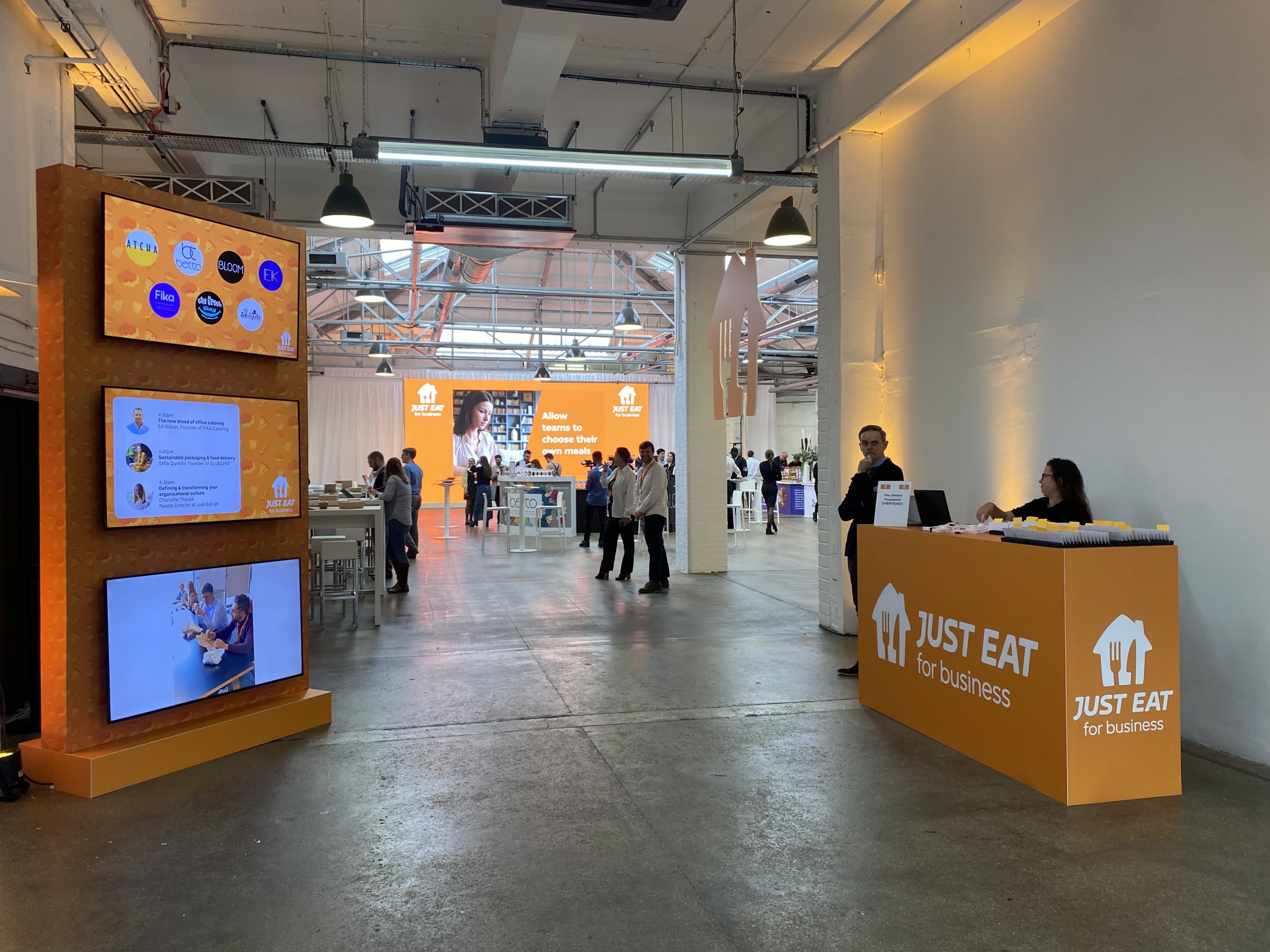
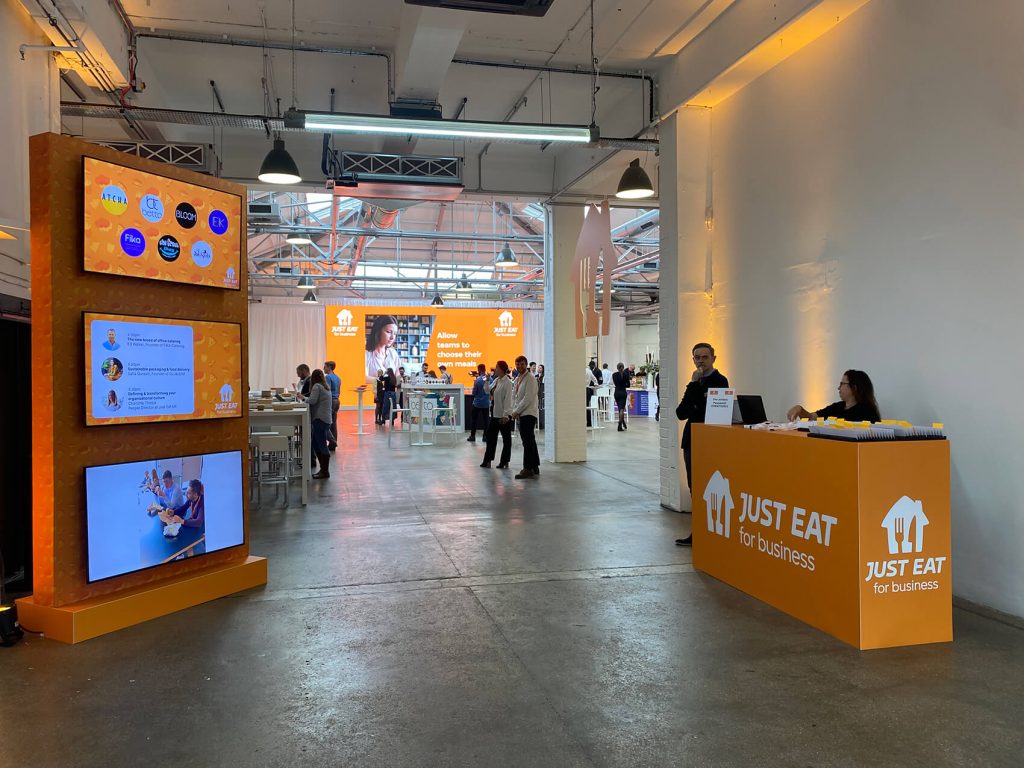
For the brand Just Eat, which wanted to introduce its corporate catering service, SEVEN developed the creative concept “Just Meet for Business.’’ We changed the space into a deeply engaging office-inspired environment that emulated the modern workplace.
The event featured live product demonstrations and interactive food stations with restaurant partners. The creative concept perfectly showed how Just Eat for Business fits easily into daily working life.
2. Connecting space, content and production
An immersive environment works best when its individual elements function as a single experience. Spatial design establishes how people will move through space. It is brought to life with content, lighting, and audio-visual elements that reinforce the brand message.
Production expertise becomes particularly important to create the right environment for immersive brand events. A creative concept may look compelling on paper, but bringing it into a live environment requires detailed planning.
Proper technical coordination between stage design, on-site operations, and lighting ensures that the event happens smoothly and attendee interaction takes place as desired.
3. Keeping every touchpoint recognisably on brand
An immersive event has numerous touchpoints. These are points of contact, from the entrance and signage to digital content and product demonstrations. Touchpoints allow attendees to actively interact with the brand story. Well-managed touchpoints enhance brand recognition and build trust.
Consistency does not mean that every brand element looks identical. The brand personality should influence the experience in ways that feel natural to guests. Visual identity, tone of voice, materials, sound, interaction and storytelling can all work together to create a recognisable brand world.
Experiential event companies strive to make the brand feel present within the experience. When every touchpoint reinforces the same brand personality, visitors leave with an impression that feels authentic. They can understand what the brand says and what it stands for.
What should brands look for in experiential event companies?
For immersive brand events, look for experiential event companies that combine creative vision with rigorous production capabilities. Such companies use measurable engagement metrics and are transparent about the budget.
1. Strategic understanding as well as creative ambition
The right experiential partner should take time to understand what the brand is trying to achieve. The experts analyse the target guests and what they should feel like after attending the event.
This strategic understanding sets the direction for the creative process. It helps ensure that choices around storytelling, environment, interaction and technology are deeply tied with the event’s purpose.
The strongest experiential event companies develop imaginative ideas while being relevant to the wider marketing objectives.
2. The ability to carry the idea through to delivery
The creative concept for immersive brand events gives the best outcome when it is executed properly. It should be translated into a physical environment and delivered consistently across every phase of the event.
That requires a collaboration between venue design, spatial planning, technical production, content, suppliers, logistics, staffing and on-site delivery. A partner that connects these disciplines well keeps the integrity of the original idea intact. Brands must look for this end-to-end capability in a company if they want to create successful immersive experiences.
Ready to create an immersive brand event?
Immersive brand events succeed when people understand and connect with them authentically. Such events are a strong blend of purposeful storytelling, audience participation, creative design and considered production. The event executes consistently across every touchpoint, which creates a brand world that feels distinctive and genuine.
At SEVEN, we specialise in end-to-end execution of immersive brand events and live experiences for clients in the UK and internationally. Our team can coordinate the creative, production and event management requirements for a consistent experience across venues. If you are considering how your next brand experience could become something audiences can truly step inside, explore your experiential creative design brief with us.
FAQs
What makes a brand event immersive?
An immersive brand event turns a brand message into an environment that audiences can engage with. It combines purposeful storytelling, creative design, and meaningful participation to make the brand feel tangible.
Who can create an immersive brand event?
Experiential event companies with expertise in strategy, creative design, production and event management can create immersive brand events. They carry the concept from initial strategy through to on-site delivery.
How does an experiential agency bring a brand story to life?
An experiential agency translates the brand story into physical spaces and content. By connecting these elements around one creative concept, the agency creates a consistent experience for the brand.
How can a brand event encourage genuine participation?
Brands can encourage participation by giving audiences opportunities to make choices and interact with products or take part in activities. The experience should be shaped around audience behaviour to make participation feel natural.
What should a business ask an experiential agency before appointing it?
Businesses should ask about the agency’s strategic approach, creative capabilities, production experience, delivery process and how it measures engagement. It is also important to understand how the agency manages budgets and coordinates suppliers, logistics and on-site operations.
The Experiences Guests Talk About Long After the Event Ends
Most people leave a conference remembering the moment that surprised them, the conversation that changed their view, the setting that made them feel part of something, or the experience they could not stop talking about afterwards.
That is the difference between an event people attend and one they remember.
Memorable conferences and corporate events give people something to feel, discover and take part in. Experiential event management brings these elements together, turning a brief into an experience with meaning rather than a schedule of activities.
What makes an event experience memorable?
1. Creating an emotional connection
An experience stays with people when it gives them a reason to care. For a business event, that reason might be a shared achievement, a celebration of the company’s culture or a message that reflects where the organisation is heading.
This is where storytelling matters. The story does not have to sit in a keynote or opening film. It can run through the way guests arrive, what they see, what they interact with and how the evening develops.
SEVEN’s “Built with Personality” client party for BW shows how a brand idea can shape the experience.

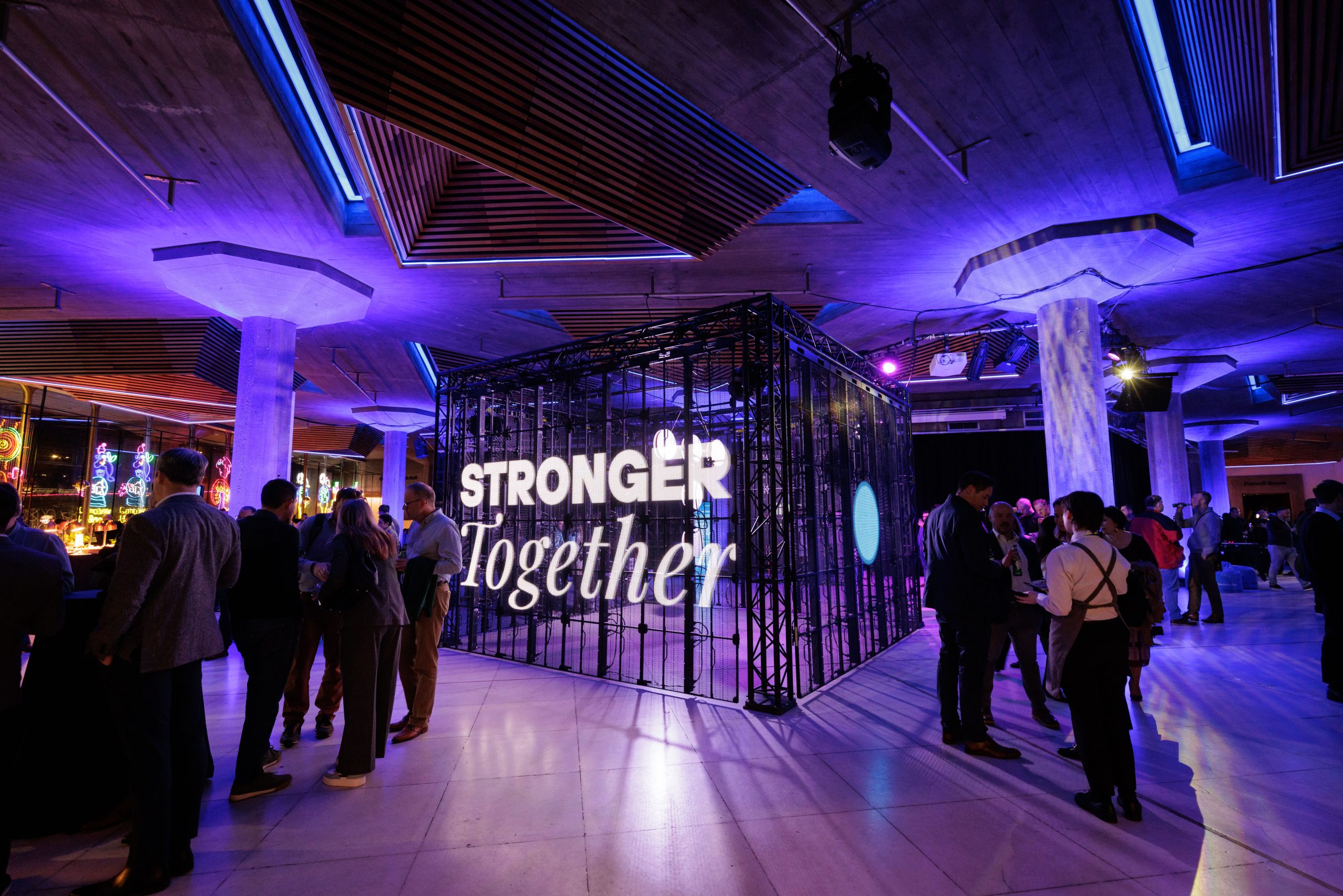
The event was built around the client’s “built with personality” message, with a large LED centrepiece, bespoke production and a mid-event change from a black-and-white visual treatment to a more colourful expression.
The creative idea gave guests something they could see and experience rather than simply hear about.
2. Giving guests something to discover and experience
People are more likely to remember an event when they have an active role in it. That means giving guests moments that invite participation, curiosity or surprise.
Consider SEVEN’s work for WeWork’s broker Christmas event. The luxury yacht changed the setting from a conventional Christmas party.

The “into the woods” concept then carried through the guest journey, from the arrival experience and performers to the themed reception, roaming entertainment and live music. Each stage gave guests another reason to look up, take part and talk to the person beside them.
These moments work best when they have a clear purpose. A surprise is memorable for a few minutes. One that supports the event’s story can shape how people remember the whole occasion.
3. Making the brand part of the experience
Branding does not have to mean placing a logo on every surface. Strong event experiences make the brand feel present through choices that reflect its character.
That might mean the venue, food, entertainment, visual identity, host, music or guest interaction. The result is a stronger connection between the company and the experience.
For SEVEN’s 20th-anniversary event for a consultancy client, Frameless London was chosen because its digital art galleries and contemporary setting matched the company’s forward-looking identity.

Catering was designed to sit within the artistic environment, while the production brought the different elements together as one celebration. The brand was expressed through the experience itself.
How experiential event management turns ideas into experiences
1. From creative concept to event production
Experiential event production connects the creative concept with the practical decisions that make it work in a real venue, with real guests and real timings.
That means thinking about staging, lighting, screens, sound, entertainment, catering, staffing, transitions and the physical movement of guests. Each decision should serve the experience rather than compete for attention.
Experiential event production also has to account for what happens between the headline moments. Guests notice when an event feels disjointed, when they are unsure where to go or when there is a long gap between activities. Careful production keeps the experience moving without making the schedule feel forced.
2. Designing around the guest journey
A memorable event considers the experience from the guest’s point of view before the event begins.
- What do they see when they arrive?
- What tells them where to go?
- What happens while they wait?
- When do they first encounter the brand?
- Where is the moment of surprise?
- What gives them a reason to stay engaged?
SEVEN’s work at The Cube in Canary Wharf shows how this thinking can shape an employee event. The venue was selected for its interactive game-show format, then customised around team sizes and timings.

A professional host guided the day, while a raffle and prizes added another layer of anticipation. Catering supported the pace of the event, helping guests stay involved throughout.
The guest journey is more than a sequence of activities. It is the emotional rhythm of the event, from arrival to departure.
Why memorable experiences matter for brands
1. Brand recall and recognition
A memorable experience gives people an association.
When a brand is connected to a distinctive venue, a strong creative idea, a shared laugh or an unexpected moment, the experience can make the brand easier to recall later.
This is particularly useful for conferences, client events and employee experiences where the organisation wants to be remembered for something more meaningful than a presentation.
2. Engagement and advocacy
A well-designed event can create those stories naturally through participation, surprise, entertainment and shared moments.
The WeWork yacht event illustrates this clearly. Guests encountered performers, themed hospitality, roaming entertainment and a live DJ across the evening, creating a sequence of experiences rather than a single feature.
The consultancy anniversary event took a different route, using digital art, carefully matched catering and a bespoke production approach to create a celebration that reflected the client’s identity.
Experiential event companies need to understand that engagement is not created by adding more content. It comes from giving people a reason to participate and remember.
For brands planning a flagship conference or corporate event, choosing an experiential agency in London can bring together creative direction, event planning and production under one team.
Bottom Line
The strongest experiences are memorable because they mean something to the people experiencing them. They might celebrate a milestone, bring a team together, express a brand personality or give clients a story worth sharing.
Experiential event production gives those ideas physical form. Good event planning connects the creative thinking, planning and delivery. And the right experiential agency in London can help turn a business objective into an experience guests genuinely remember.
For SEVEN, that means treating the event as a complete experience, from the first creative thought to the final guest interaction. If you are planning an event that needs more than a standard format, explore SEVEN’s Experiential Creative Design service to see how creative thinking can shape the experience from the start.
FAQs
What is an experiential agency?
An experiential agency in London can develop live experiences that help audiences connect with a brand, organisation or message through participation, environment, storytelling and interaction. Its work can cover creative concept development, event design, production and guest experience.
What does an experiential agency do?
An experiential agency takes a business objective and develops the creative and practical plan needed to bring it to life. This can include choosing a venue, developing the concept, designing the guest journey, managing suppliers, producing content, coordinating entertainment and overseeing delivery on the day.
How do you evaluate experiential agencies for global flagship events?
Look beyond a portfolio of impressive-looking events. Assess whether the agency understands your brand, can manage complex production requirements, has experience with the scale and locations involved, and can explain how its creative decisions support the audience experience. Ask for relevant case studies and evidence of how the team handled the practical demands of comparable events.
What event management companies are known for innovation in experiential marketing?
When comparing experiential event companies, look at the thinking behind their work rather than visual impact alone. Review how they develop concepts, use venues, shape guest journeys and connect production choices to the client’s objectives. Relevant case studies can reveal far more about an agency’s approach than a list of services.
The Power of Live Events in a Digital World
The Rise of Digital Fatigue
As digital platforms become an essential part of everyday life, many people are experiencing what is known as digital fatigue.
Technology has revolutionised the way we work and communicate, making information more accessible than ever. However, the constant stream of emails, video calls, notifications, and online content can lead to information overload and mental exhaustion.
Many professionals now spend much of their working day moving from one screen to the next. While these tools have improved efficiency and connectivity, they have also reduced opportunities for genuine human interaction.
As a result, people are increasingly seeking in-person experiences that offer a stronger sense of connection, engagement, and belonging. This shift is one of the key reasons demands for live events continues to grow across the event industry.
Why Face-to-Face Interaction Still Matters
Despite advances in technology, relationships are still built most effectively through personal interaction. Body language, eye contact, spontaneous conversations, and shared experiences all play a crucial role in building trust and meaningful connections. While virtual meetings can facilitate communication, they cannot fully replicate the authenticity of face-to-face engagement.
Whether it’s strengthening client relationships, networking with industry peers, or bringing teams together through corporate events, in-person interactions often lead to deeper connections and better outcomes. Networking events and business gatherings also create opportunities for unexpected conversations and valuable introductions that simply don’t happen in the same way online.
The Power of Shared Experiences
One of the greatest strengths of live events is their ability to create memorable and immersive event experiences. The atmosphere, venue, speakers, entertainment, and personal interactions all contribute to an experience that attendees can truly feel, rather than simply observe. Shared experiences create emotional connections, making events more engaging and memorable.
People are far more likely to remember an inspiring keynote speech, a meaningful conversation, or an exciting product launch when they experience it in person. By comparison, virtual attendees often find themselves competing with emails, notifications, and other distractions.
For businesses, these powerful event experiences can strengthen relationships, increase brand awareness, reinforce company culture, and create lasting impressions long after the event has ended.
The Future Is Not Digital or Live – It’s Both
The growing importance of live events does not mean digital technology is becoming less relevant. In fact, the most successful events combine the strengths of both.
Hybrid events have become an increasingly popular way to connect audiences across multiple locations. By combining face-to-face experiences with livestreaming and digital platforms, hybrid events offer greater accessibility, increased audience reach, and more flexibility for attendees.
Digital technology also enhances every stage of the attendee journey, from pre-event promotion and networking to event apps, personalised agendas, and post-event content. Rather than replacing live experiences, technology amplifies their impact.
The future of the event industry lies in creating integrated experiences that combine the reach of digital tools with the authenticity of face-to-face interaction.
SEVEN Insight
The digital age has transformed how we communicate, collaborate, and consume information. However, it has also highlighted the limitations of virtual interaction and contributed to rising levels of digital fatigue.
As people seek more meaningful ways to connect, live events are becoming increasingly valuable. They offer something technology alone cannot provide authentic human connection, memorable shared experiences, and opportunities to build lasting relationships.
Whether through corporate events, networking events, conferences, exhibitions, or celebrations, live experiences continue to play a vital role in bringing people together. In a world dominated by screens, the power of being present has never been more important.
Looking to Create an Impactful Live or Hybrid Event?
At SEVEN, we specialise in creating engaging live, virtual, and hybrid events that connect people, inspire audiences, and deliver measurable results. Whether you’re planning a conference, networking event, exhibition, incentive trip, or company celebration, our team can help you create an experience that leaves a lasting impression.
Discover how we can support your next event by exploring our Virtual & Hybrid Events services here.
What Is Experiential Event Management? A Complete Guide for Brands
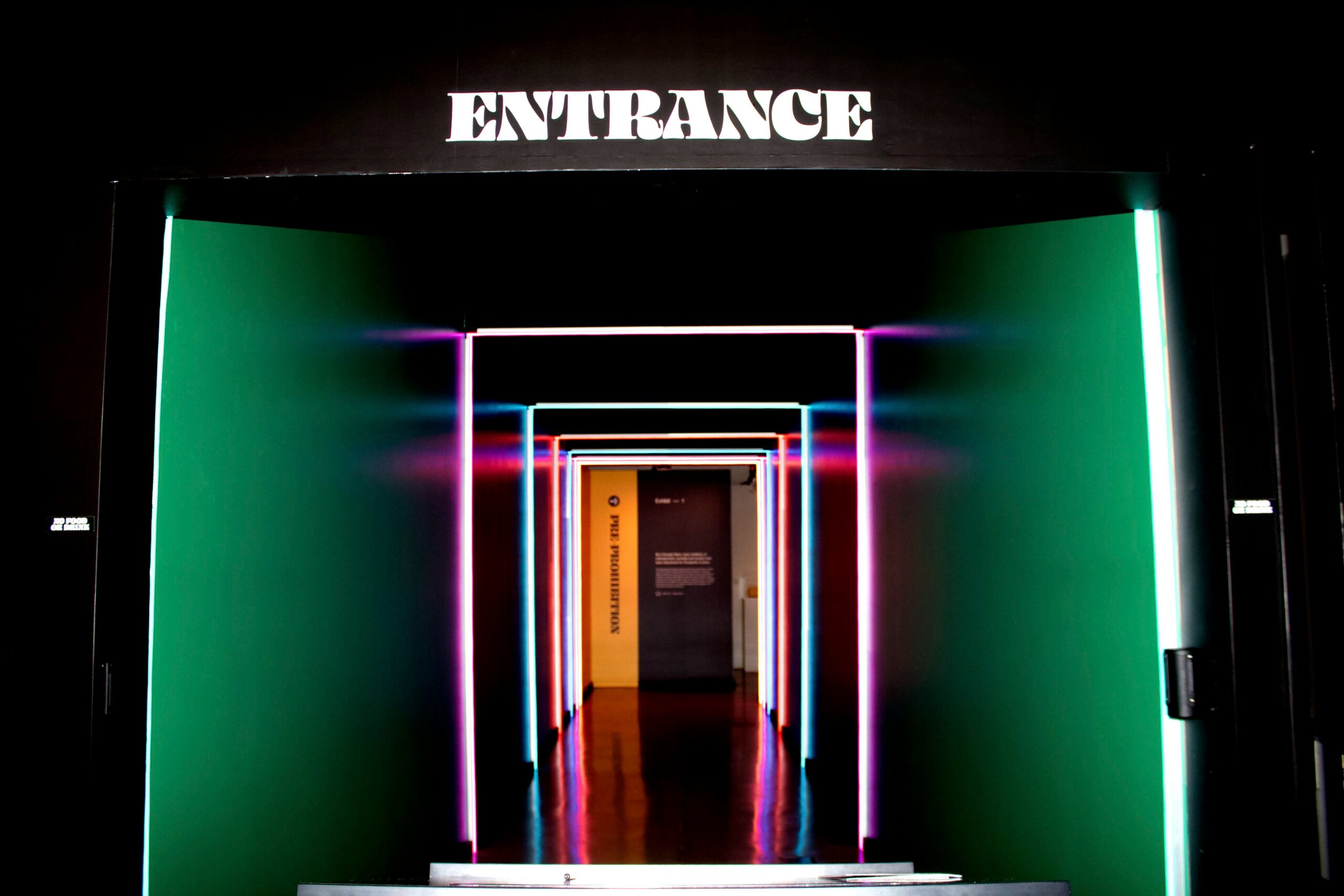
Most corporate events ask people to sit and watch. Experiential events ask them to take part. That shift sounds small. The difference in results is significant.
Experiential event management is the discipline behind that shift. Today, we wil dive deep into what it is, how it works, and why UK brands are moving towards it.
What Is Experiential Event Management?
Experiential event management is the planning and delivery of events built around active participation.
The audience does not simply receive a message. They experience it. That means designing every element around how people feel, move, and interact, rather than just what they are told.
The goal is genuine engagement that produces lasting brand recall and measurable commercial outcomes. It brings together several disciplines under one process:
- Strategic planning and audience insight.
- Creative concept and experience design.
- Technical production and build.
- Technology integration.
- Measurement and reporting.
A good agency handles all of these as one joined-up service, not as separate workstreams handed between teams.
How Do Experiential Events Differ From Traditional Corporate Events?
Traditional events and experiential events serve different purposes. The table below sets out the main differences.
| Factor | Traditional Event | Experiential Event |
|---|---|---|
| Audience role | Passive observer | Active participant |
| Primary goal | Deliver information | Create a memorable experience |
| Format | Presentations and panels | Immersion, interaction, and participation |
| Brand recall | Fades within days | Lasts weeks or months |
| Measurement | Attendance numbers | Engagement, dwell time, and conversion |
| Emotional impact | Limited | Central to the design |
Neither format is wrong. A board update or a compliance briefing does not need an immersive build.
A brand launch, a flagship conference, or a customer activation almost always benefits from the experiential approach.
What Are The Core Components of Experiential Event Management?
Strong experiential event management rests on five components working together.
1. Audience Strategy
Everything starts with the audience.
A good agency studies who the attendees are, what they care about, and what will genuinely engage them. That insight shapes every decision that follows. Without it, even a beautiful event risks missing the people it was built for.
2. Experience Design
This is where the concept takes shape.
Experience design covers the creative idea, the spatial layout, the visitor journey, and the emotional arc of the event. It answers four questions:
- What do people see and feel when they arrive?
- How do they move through the space?
- Where does the energy build and settle?
- What do they take away when they leave?
3. Production Planning
Production turns the concept into something real.
This covers staging, lighting, audio-visual, fabrication, build, and on-site technical management. It is the difference between an idea that looks good on paper and an event that works on the day.
4. Technology Integration
Technology adds depth and interactivity to the experience. Common tools include:
- Augmented and virtual reality installations.
- Interactive touchscreens and digital configurators.
- Event apps with personalised content.
- Live polling and audience participation tools.
- Data capture systems for measurement.
The technology should always serve the objective, never distract from it.
5. Measurement and Analytics
A professional approach to experiential event management builds measurement in from the start.
Tracked metrics include dwell time, participation rates, social reach, lead conversion, and post-event survey scores.
This data tells you what worked and what to build on next time.
What Are The Benefits for Corporate Brands?
Experiential events deliver value that traditional formats struggle to match. The main benefits include:
- Stronger recall: People remember what they did far longer than what they were told.
- Deeper brand connection: A positive experience transfers directly to brand feeling.
- Natural social sharing: Memorable moments generate organic content from attendees.
- Higher quality leads: People who interact with a brand are more likely to act.
- Measurable returns: Clear metrics connect the event to commercial outcomes.
- Lasting differentiation: A distinctive experience sets a brand apart from competitors.
What Are The Common Experiential Event Formats?
Experiential event management applies across many formats. Five are particularly common for corporate brands.
1. Product Launches
A launch gives a new product its first public moment.
The experiential approach lets attendees handle, test, and feel the product rather than watch a presentation about it.
2. Conferences
Modern conferences blend content with experience.
Interactive sessions, immersive staging, and participation tools keep delegates engaged across a full day rather than letting attention drift.
3. Roadshows
Roadshows take a brand experience to multiple locations.
Consistency is the challenge here, and strong planning keeps the experience high quality at every stop.
4. Incentive Events
Incentive events reward performance with something memorable.
The experiential approach turns a reward into a genuine highlight that staff or partners talk about long afterwards.
5. Brand Activations
Activations create brand moments in public or semi-public spaces.
They reach audiences who never registered for an event, building awareness through surprise and participation.
What Are The Challenges and How to Overcome Them?
Experiential events carry challenges that traditional formats do not. Each one is manageable with the right partner.
| Challenge | Why It Happens | How to Overcome It |
|---|---|---|
| Complex logistics | More moving parts than a standard event | Detailed planning and a single accountable agency |
| Higher production cost | Builds and technology add expense | Clear budget priorities tied to objectives |
| Measuring impact | Engagement is harder to track than attendance | Measurement structure built in from the brief |
| Technical risk | Live technology can fail under pressure | Full rehearsals and on-site technical crew |
| Consistency across sites | Roadshows must feel the same everywhere | Standardised design with local adaptation |
How to Choose an Experiential Event Management Partner?
The right partner makes the difference between a concept and a result. When evaluating agencies, look for the following:
- Proven experience in delivering events of your type and scale.
- A clear measurement approach which is defined before the event begins.
- Strong supplier relationships that adds value and control cost.
- A single point of accountability, from brief to pack-down.
- Honest advice on what will and will not work for your brief.
At SEVEN, experiential event management brings together creative, production, and strategy under one roof. Our teams work from the same brief, so the concept and the execution are designed together.
That joined-up process is what produces events where every element feels like it belongs. If you are planning an experiential event, we would love to talk through your brief.
Connect with the team at SEVEN.
FAQs
1. What does experiential event management mean?
It is the planning and delivery of events built around active participation. The audience experiences a brand message rather than simply receiving it, which produces stronger recall and measurable results.
2. What is the difference between event management and experiential event management?
Standard event management focuses on planning and logistics. The experiential approach adds creative experience design, audience strategy, and immersive production to create genuine engagement.
3. What is experiential marketing?
Experiential marketing is a strategy that builds brand connection through direct, participatory experiences. Experiential events are one of the main ways brands deliver it.
4. How do you measure experiential event success?
Success is measured through dwell time, participation rates, social reach, lead conversion, and post-event survey scores. A good agency sets these metrics before the event begins.
10 Experiential Event Ideas to Engage Corporate Audiences
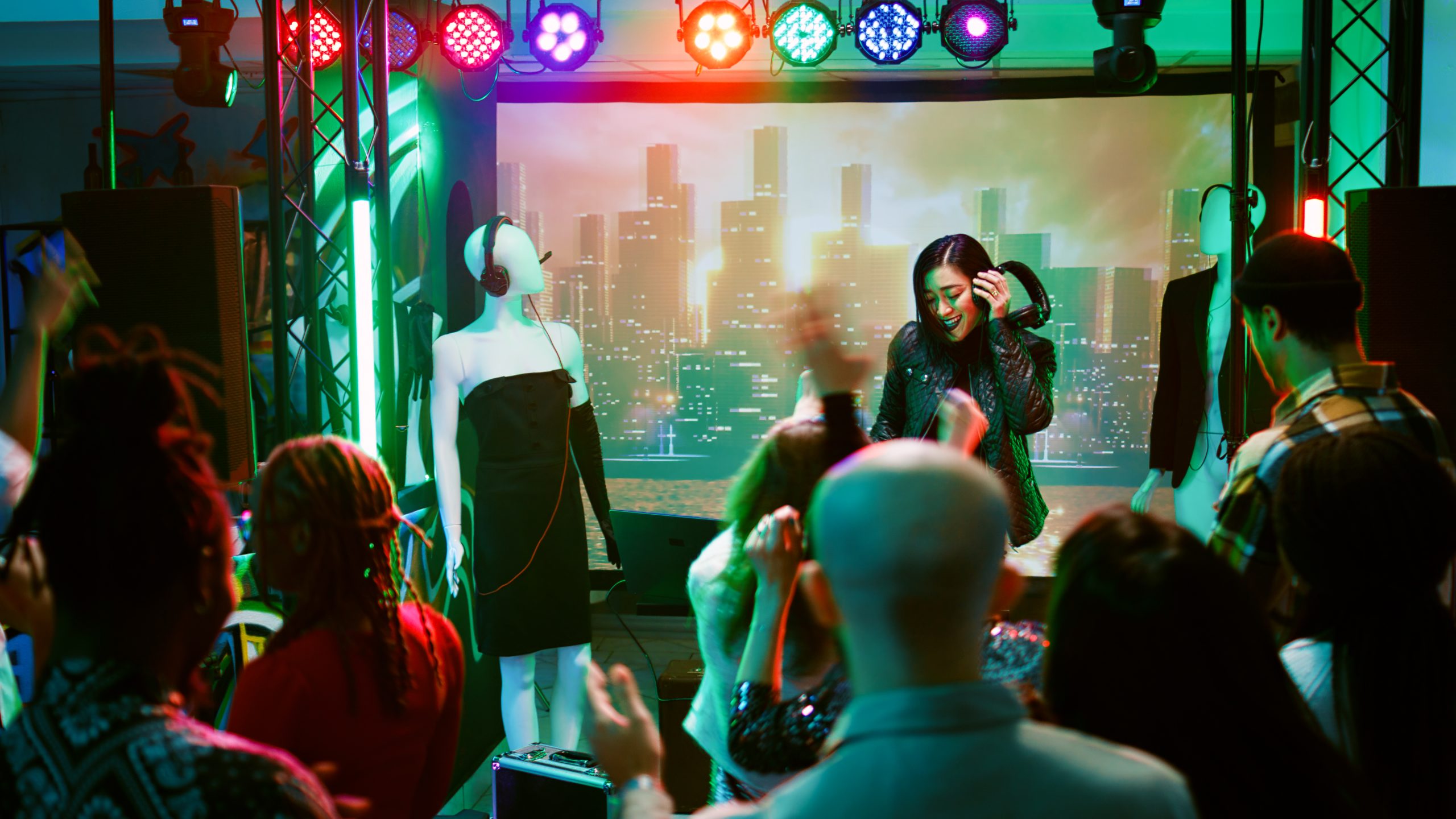
Attendance is no longer enough. Putting people in a room and presenting at them produces limited results. Delegates leave, the content fades, and the brand impression disappears within days.
Experiential events work differently. They create situations where people do something, feel something, or discover something. Those moments stick. This guide covers ten ideas UK brands are using to build that kind of engagement, with real examples of what they look like in practice.
What Are Experiential Events?
Experiential events are designed around active participation rather than passive attendance. The audience is a part of what happens.
They can take many forms:
- A VR installation that transports commuters to a beach.
- A gamified team challenge that bonds a workforce.
- An anniversary celebration built inside a digital art gallery.
- A hackathon workspace transformed from a standard hotel ballroom.
- A product launch that puts attendees inside the brand story.
Brand experience events are built around a specific outcome.That outcome might be a feeling, a memory, a qualified commercial conversation, or a measurable shift in brand perception. Every design decision serves that outcome. The format follows the objective, not the other way round.
Why Experiential Events Deliver Better Engagement?
The case for experiential event production over traditional formats is well-supported by how people process and retain information.
| Benefit | What It Means in Practice |
|---|---|
| Higher recall | People remember experiences far longer than presentations. An event that surprised them is still being discussed weeks later. |
| Stronger brand connection | When a brand creates an experience someone genuinely enjoyed, that positive feeling transfers to the brand itself. |
| Natural social sharing | Well-designed brand experience events generate content attendees want to post because the experience was worth showing to someone else. |
| Measurable ROI | Dwell time, participation rates, lead conversions, and post-event metrics all give you a clear picture of what worked. |
| Better lead quality | Attendees who interact physically with a brand or product are significantly more likely to take the next commercial step. |
A professional experiential event agency builds a measurement structure around all of these from the start of the brief.
10 Experiential Event Ideas for Corporate Audiences
1. Immersive Brand Storytelling Experiences
Take your brand narrative off the slide deck and into the room. Immersive storytelling uses spatial design, lighting, audio, and content to put your audience inside the story you are telling. This works particularly well for:
- Anniversary events and milestone celebrations.
- Brand relaunches and repositioning campaigns.
- Events designed to shift perception among a specific audience.
- Leadership moments where the environment needs to match the ambition of the message.
The physical environment becomes the medium. Guests discover the story by moving through the space, rather than being told it from a stage.
2. Interactive Product Demonstrations
Replace the static product display with a hands-on experience. Give attendees the chance to use, configure, or test the product themselves. They are guided by your team but driven by their own curiosity.
People who have physically interacted with a product are significantly more likely to take the next step in the buying process. That outcome alone justifies the investment in this format.
3. AR and VR Event Experiences
Augmented and virtual reality create moments with no equivalent in traditional event formats. They transport people, show them things that do not exist yet, or give them a perspective they could not access any other way.
SEVEN delivered exactly this for TravelUp and Visit Florida at Waterloo station’s main concourse. The brief was to give London commuters a genuine taste of Florida in the middle of winter.
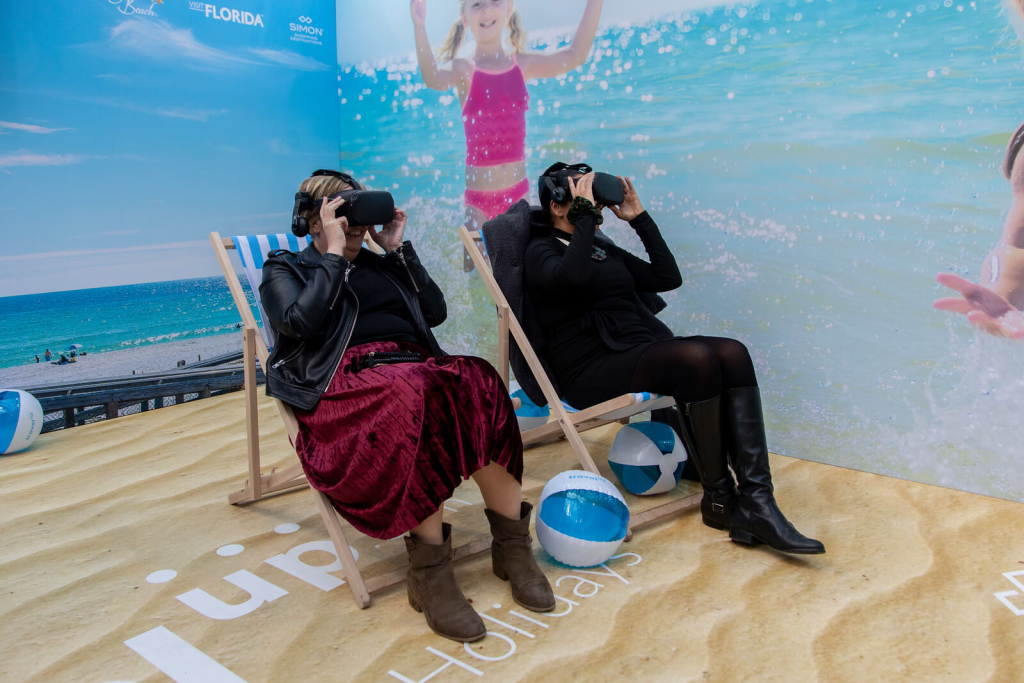
SEVEN produced an immersive installation centred on a VR experience that guided visitors through Florida’s highlights. The physical environment matched the concept completely:
- Canvas wraps and vinyl flooring recreated a beach scene.
- Mounted heaters brought real warmth to the concourse.
- The VR journey delivered both knowledge and feeling for the destination.
- The installation generated high footfall and genuine dwell time in one of London’s busiest commuter spaces.
- Brand exposure was achieved for both TravelUp and Visit Florida simultaneously.
Read more about this project: Bringing Florida Sunshine to London
4. Live Audience Challenges
Put your audience to work on something. Live challenges generate energy, create genuine investment in the outcome, and give teams something to talk about long after the event ends. Formats that work well include:
- Problem-solving tasks with a live judging moment.
- Creative briefs completed in competing teams.
- Head-to-head competitions with a visible leaderboard.
- Timed challenges that build pressure and momentum.
- Collaborative tasks that require cross-team communication to succeed.
These work especially well for internal events where building connection between teams is part of the objective. They also work for client-facing events where you want people engaged rather than passive.
5. Gamification Experiences
Applying game mechanics to an event changes the atmosphere entirely. People who arrived expecting a standard day out leave with stories to tell. SEVEN delivered this for a client looking to reward their employees with a day that felt genuinely different.
The brief called for something fun, inclusive, centrally located in London, with team activity and quality food throughout. SEVEN proposed The Cube at Canary Wharf, a venue built around immersive game-show-style challenges.
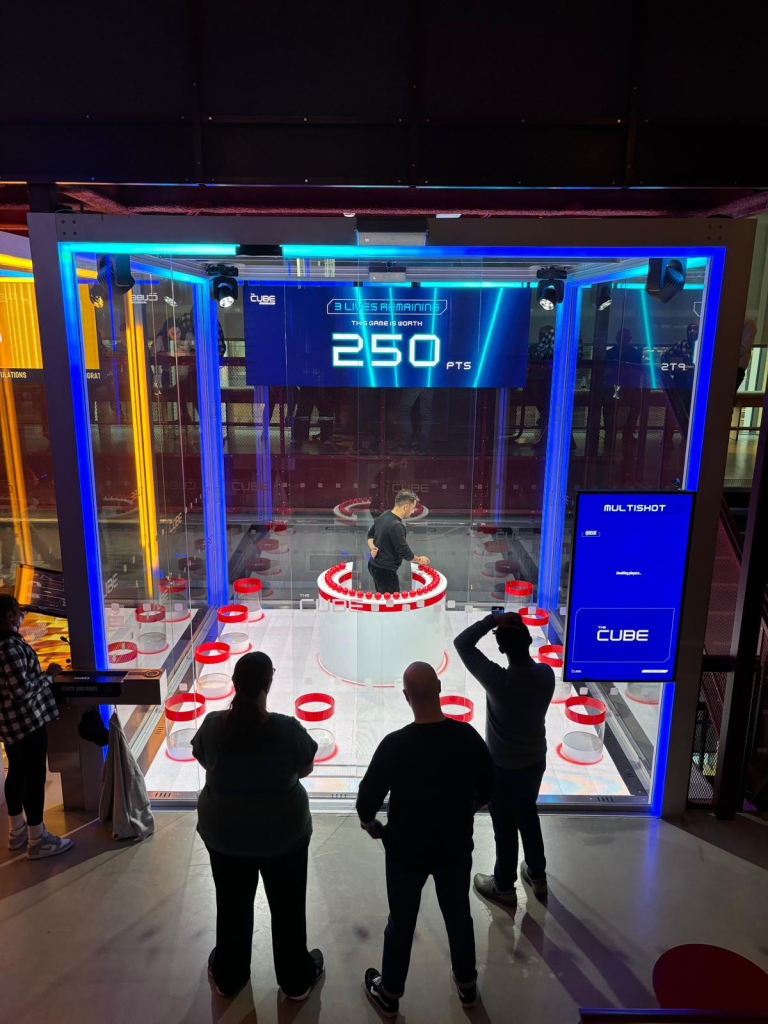
The space was bought out entirely to tailor the experience to the required team sizes and run of show.
The full programme included:
- A professional host to lead the day with humour and energy.
- Customised game challenges tailored to the team structure.
- A raffle giveaway with prizes including wireless headphones and experience days.
- High-quality catering running across the full day.
- Structured timing to maintain momentum from start to finish.
The result was a day that felt like a genuine reward rather than a corporate obligation. This is corporate event engagement at its most effective: people left with stories, not just memories.
6. Innovation Labs
Create a space where attendees can experiment, test, and build things, even if only for a few hours. Innovation labs work well for technology companies, professional services firms, and brands that want to position themselves as places where new thinking happens. They also produce a practical return.
The ideas and feedback generated during the lab are genuinely useful to the business, giving the event investment more than one measurable output.
7. Networking Through Experiences
Structured activities remove the awkwardness of open networking. They give people something to do together, which creates the conditions for genuine conversation.
Nobody has to make a cold approach across a room. The connections formed through corporate event engagement built on shared experience tend to be stronger.
The relationship has a story attached to it from the start. Formats that work well include:
- Creative workshops with a shared output.
- Collaborative challenges requiring cross-team input.
- Paired or small-group task formats with rotating partners.
- Shared culinary or craft experiences with a social atmosphere.
8. Sustainability-Focused Activations
Events built around environmental or social themes connect with audiences in a way product-led events often cannot. They create meaning alongside the brand impression.
Formats that land well include:
- Beach or park clean-up events tied to the brand’s environmental commitments.
- Community planting or habitat restoration activities.
- Skills-sharing sessions with local charities or social enterprises.
- Events where a portion of the experience directly funds a cause.
The key is authenticity. An activation that feels like a PR exercise will land badly. One that connects genuinely to the brand’s values will land very well.
9. Multi-Sensory Experiences
The most memorable brand experience events engage more than one sense. Sound, scent, texture, taste, and visual design all shape how people feel in a space.
SEVEN designed this kind of experience for a consultant client celebrating its 20th anniversary. The client wanted something beyond a traditional dinner. They wanted a landmark celebration that reflected a forward-thinking identity.
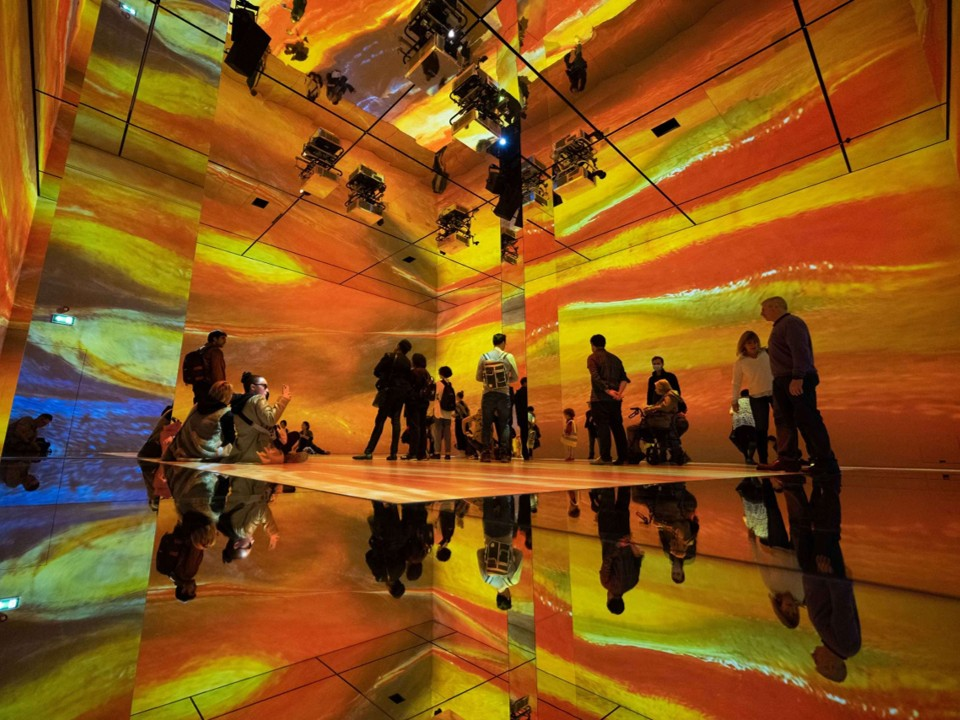
SEVEN recommended Frameless London, whose digital art galleries allowed guests to actively engage with shifting visual content.
Every element was considered:
- Catering designed to complement the artistic environment.
- Canapes presented to match the aesthetic of each gallery.
- Production transforming the venue into a bespoke celebratory space.
- A guided journey through the exhibit rather than a static display.
- A cohesive experience from arrival to departure with no jarring transitions.
The event received overwhelmingly positive feedback. It positioned the client’s brand strongly for its next chapter.
Read more about this project: Beyond the Frame
10. Personalised Attendee Journeys
One-size-fits-all events leave some attendees feeling underserved. Personalisation makes attendees feel seen and valued rather than processed. Personalisation can take many forms:
- Pre-event preference data used to tailor session recommendations.
- Custom event apps that surface different content by delegate role and interests.
- Personalised welcome gifts or name-specific touches at arrival.
- Tailored session tracks for different audience segments within the same event.
- Post-event follow-up matched to what each delegate actually engaged with.
The principle is the same at every level of sophistication. The event was made for this person, not for a generic attendee.
How an Experiential Event Agency Brings These Ideas to Life?
The gap between a good concept and a well-executed experiential event is where many in-house attempts fall short. These ideas are not difficult to imagine. They are difficult to execute at a standard that reflects well on the brand.
A professional experiential event agency closes that gap. It brings creative development, production expertise, supplier relationships, and on-site management that turns a concept into something people actually experience as intended.
At SEVEN, experiential event production is built into everything we do. Our in-house creative and production teams work from the same brief. Concept and execution are designed together, not handed off in sequence.
That joined-up process is what produces events where every element feels like it belongs.
Measuring the Success of Experiential Events
Corporate event engagement can be measured with more precision than most clients expect. The key is setting up the measurement structure before the event, not after it.
Metrics to track include:
- Dwell time at key zones or installations.
- Participation rates across different elements of the experience.
- Social content generated by attendees during and after the event.
- Lead conversations started and how many progressed to a commercial next step.
- Net Promoter Score and post-event survey responses.
- Brand recall measured in client and prospect conversations in the weeks following.
Behavioural data and qualitative feedback together tell you what to build on. A good experiential event agency sets up this measurement structure at the briefing stage, because the metrics you track should follow directly from the objectives you defined.
Planning an experiential event and want to talk through what is possible? Connect with the team at SEVEN.
FAQs
1. What is an experiential event?
Experiential events place the audience at the centre of an active experience rather than as passive observers.
The goal is genuine engagement through participation, immersion, or personalised moments that produce stronger brand recall and measurable commercial outcomes.
2. Why are experiential events effective?
People remember what they did far more reliably than what they were told.
Brand experience events create associations between a brand and a positive, memorable feeling that traditional formats cannot replicate.
3. How much do experiential events cost?
Costs vary based on format, scale, location, and production complexity.
A professional experiential event agency will work transparently within your budget and advise on where production investment makes the biggest difference to the outcome.
4. What industries benefit most from experiential marketing?
Technology, consumer brands, financial services, automotive, healthcare, and professional services all use experiential event production effectively.
The format works for any industry where building genuine audience connection is a commercial priority.
Exhibitions Taking Place this Summer
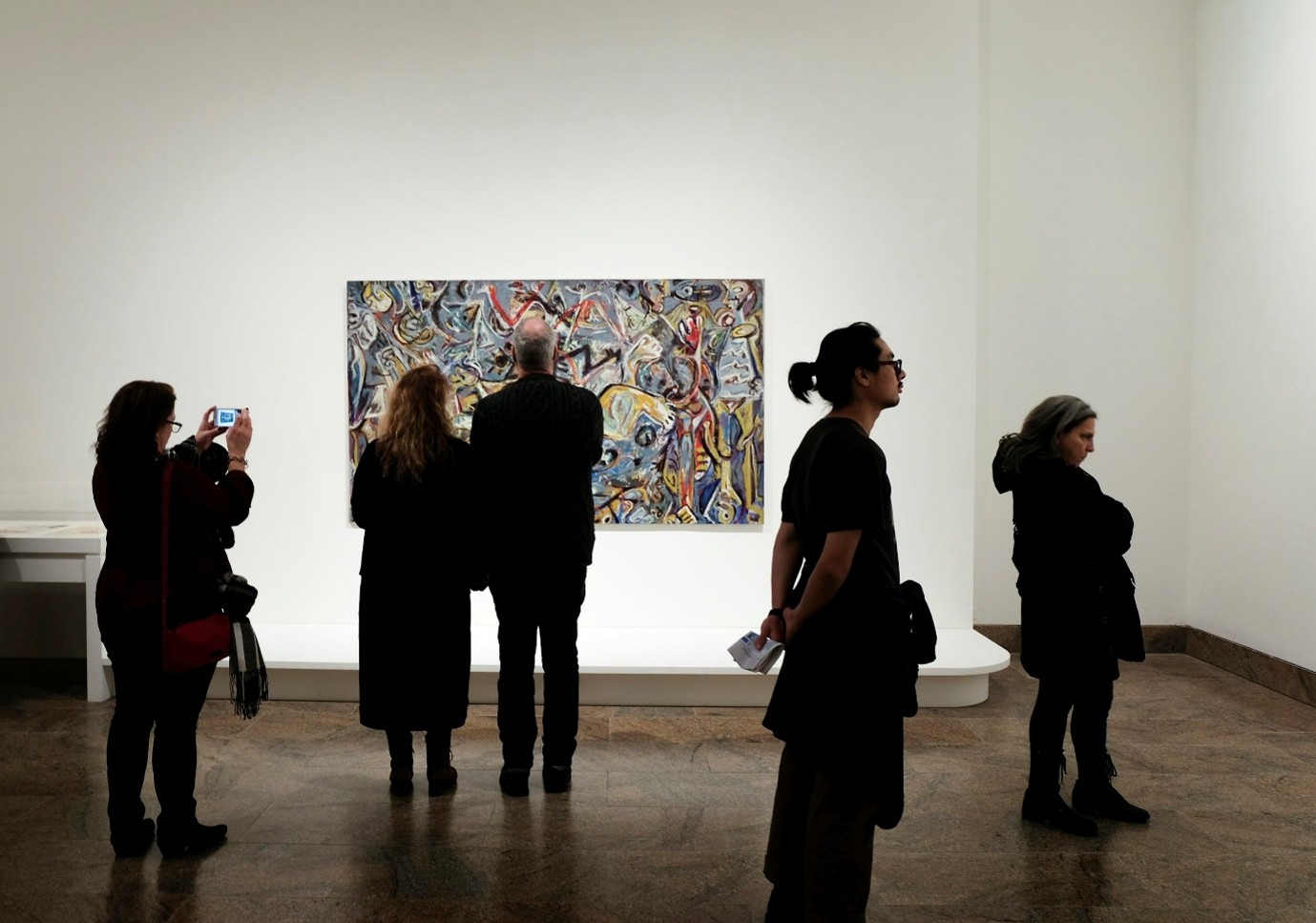
In Other Worlds
At the heart of the season is In Other Worlds, an immersive exhibition by filmmaker and speculative architect Liam Young, taking place in The Barbican. This is his first major solo exhibition and one to definitely go and visit. Through cinematic installations, soundscapes, costumes, and imagined climate futures, the exhibition explores what humanity’s next chapter could look like. Rather than dystopian collapse, Young presents radically optimistic visions rooted in real technological possibilities.
Dates: 21st May to 2026 to Sunday 6th September 2026
Tate Modern Continues Its International Focus
Across the Thames, Tate Modern is continuing its run of internationally focused exhibitions with a major retrospective dedicated to kinetic and Op artist Julio Le Parc. Renowned for his immersive investigations of movement, light, mirrors, and audience participation, Le Parc’s work invites visitors to become part of the experience rather than simply observe it. Featuring suspended installations and dynamic optical environments, the exhibition promises to be one of the summer’s most visually captivating shows.
Dates: 11th June 2026 – 3 May 2027
James McNeill Whistler at The Tate
While Tate Modern looks outward and experimental, Tate Britain is turning its attention to one of the artists who helped define London visually: James McNeill Whistler. The exhibition explores Whistler’s enduring fascination with the River Thames and the industrial landscape of nineteenth-century London, bringing together his atmospheric “Nocturnes” with etchings, portraits, and seldom-displayed works. Critics have commended the show for evoking both the dynamism and underlying melancholy of a city undergoing rapid modern transformation.
Dates: Till 27th September 2026
Rising Voices: Contemporary Art from Asia, Australia and the Pacific
A landmark collaboration between the V&A and the Queensland Art Gallery | Gallery of Modern Art (QAGOMA), Brisbane.
At the V&A this summer the standout exhibition is Rising Voices. Created in partnership with Queensland Art Gallery’s Asia Pacific Triennial, the exhibition brings together more than 70 works by artists from 25 countries, forming one of the UK’s most significant recent presentations of contemporary Asia-Pacific art. The exhibition navigates themes of politics, spirituality, colonial legacies, and material innovation with remarkable fluidity. It also signals a wider shift across London’s cultural institutions toward more global perspectives that question and expand beyond traditional Eurocentric art histories.
Dates: till 10th January 2027
Have you thought about hosting an event in an exhibition space?
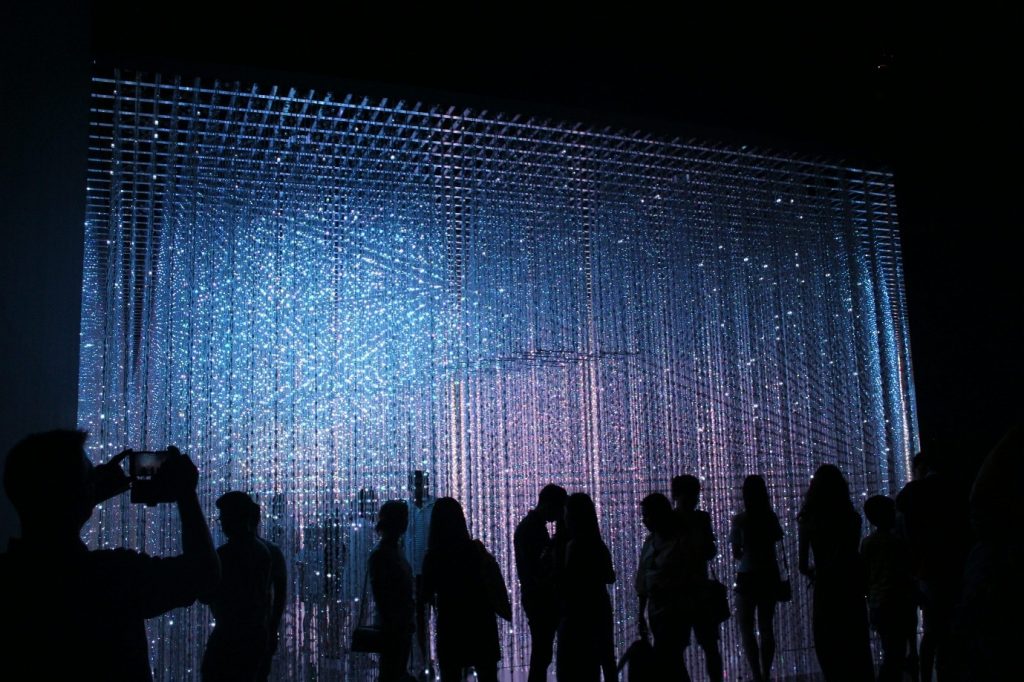
Exhibitions offer far more than just a cultural experience, they create a dynamic and visually engaging setting for events that naturally attracts people in. Hosting an event within an exhibition space allows guests to immerse themselves in art, design, or storytelling while networking, socialising, or celebrating, making the occasion feel far more memorable than a traditional venue. Whether it’s a product launch, corporate gathering, private reception, or brand activation, exhibitions provide built-in atmosphere, conversation starters, and a sense of exclusivity that encourages attendance and engagement. By combining entertainment with experience, exhibition events draw audiences who are looking for something interactive, inspiring, and shareable, helping organisers create buzz both in person and across social media.
At SEVEN, we provide end-to-end support including creative development, logistics management, venue sourcing, production and on-site event delivery to ensure a seamless experience across every location. Get in touch with us to start the conversation.
Events as a Demand Generation Channel: A Modern B2B Strategy
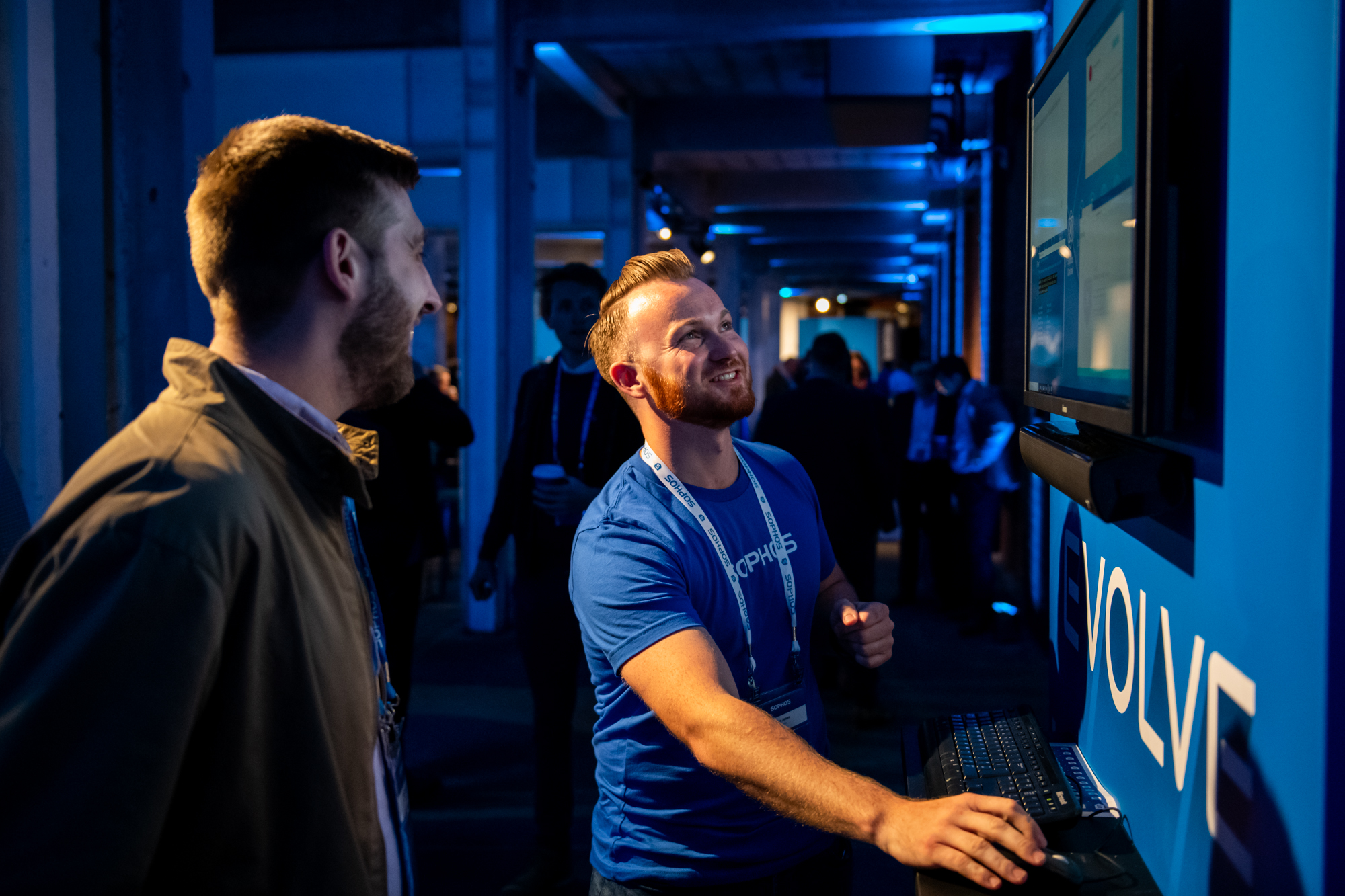
Imagine yourself walking into a room full of energy, industry pros everywhere, workshops that pull you in, and talks you actually want to hear. People aren’t just trading business cards; every chat, every demo, and every panel gets you thinking and pushes you to do something about it. These days, if you’re in B2B, you can’t treat events as an afterthought. They’re a must-have for sparking demand, building real relationships, and showing people your brand means business.
Companies lean on these events and conferences more than ever. They’re where you actually connect with prospects, guide them through their decision-making, and move them closer to working with you. So, what makes these events actually work? Let’s explore how to make them count, keep people engaged, and see how SEVEN helps businesses turn all that activity into potential demand generation leads.
Why Do B2B Companies Use Events as Demand Generation Tools?
Simple events are real. They give people a chance to actually meet your team, check out your products, and get a sense of what your brand’s about, all in person. It’s nothing like just running ads or sending emails. You’re not just pitching; you’re talking with people, answering questions as they come up, understanding what really matters to them, and highlighting why you are the right fit.
And this strategy works. The latest 2025 data says over 80% of B2B marketers count live events as a core piece of their strategy. Even better, 68% say they get higher-quality leads from events than anywhere else. Demand gen conferences and events let you connect with people, prove your worth, and have the kinds of real conversations that just don’t happen online. When you’re running the show, you control the space and the story. That kind of hands-on connection? You can’t really beat it.
Core Strategies for Effective Demand Generation Events
1. Start with clear event objectives:
Every successful event begins with a central cause. Do you want to attract new leads, strengthen relationships with your clients, or maybe share something valuable with your audience? Once you know what exactly you want, planning becomes easy. Every component of your event begins to cooperate to advance your company.
2. Understand who your audience is:
Divide your audience into groups according to their occupations, fields of expertise, and genuine concerns. People pay closer attention and have much better conversations when you centre your events and material around these groups.
3. Create experiences that encourage participation:
People are much more attentive when they are not just sitting and listening. Using workshops, small group conversations, or hands-on demonstrations, explain complex ideas while letting people engage with one another.
4. Expand reach with hybrid participation:
Events that are partially in-person and partially online allow more people to participate from anywhere. Recent research shows that hybrid participation increases attendance by up to 35% compared to in-person-only events.
5. Use event data to strengthen lead generation:
By keeping track of attendee information at every stage, from registration, workshops, and follow-ups. This helps your team identify hot leads, understand different audience segments, and then build up communication that actually resonates with the event. This ensures that your efforts deliver measurable outcomes.
Closing Thoughts
Demand generation events are no longer just an extra today; they are a vital part of any B2B marketing strategy. Whether through immersive experiences or hybrid formats, well-planned events inform, inspire, and motivate your audience to take action.
Working with a seasoned corporate event agency helps organisations get the most from every event, strengthening relationships, boosting ROI, and creating experiences that leave a lasting impression.
Events are more than gatherings; they’re chances to connect, engage, and influence. With SEVEN supporting your planning, each interaction is carefully crafted to deliver meaningful outcomes.
If you’re ready to see how demand generation events can support your business goals, reach out to SEVEN at hello@sevenevents.co.uk and start planning an event that truly makes a difference.
FAQs
1. What are demand generation events in B2B marketing?
Demand generation events are strategic experiences like conferences, workshops, or webinars designed to attract prospects, build relationships, and generate high-quality leads.
2. Why are events effective for B2B lead generation?
Events enable real-time interaction, helping businesses build trust, demonstrate value, and engage prospects more effectively than digital-only channels.
3. How can hybrid events improve demand generation results?
Hybrid events combine in-person and virtual formats, increasing reach, boosting attendance, and engaging a wider audience across locations.
4. What strategies make a demand generation event successful?
Clear objectives, audience targeting, interactive formats, and data tracking are key to maximising engagement and generating qualified leads.
5. How do you measure ROI from demand generation events?
ROI is measured through metrics like lead quality, attendee engagement, conversion rates, and post-event follow-up performance.
A Year of Wow: The Event Trends That Defined 2025
1. Human-Centred Experiences Took the Spotlight
In 2025, events were all about connection, the real kind.
Clients looked for gatherings that felt warm, thoughtful and designed with their guests in mind. At SEVEN, we built events that put people at the centre of everything: moments to pause, moments to talk, and moments that felt like “this was made for me”.
Cosy breakout corners, conversation-sparking activities and experiences that felt less like a schedule and more like a journey became the norm.
2. Sustainability Became Non-Negotiable
Sustainability shifted from a “nice to have” to a must, and the best part? Creativity never suffered for it.
Throughout 2025, clients embraced low-waste catering, energy-efficient lighting and smart reuse of décor, and SEVEN moved with them. We partnered with suppliers who cared as much as we did and showed clients how small choices could make a big difference, supported by our sustainability policy.
Sustainable proved it could be stylish, and we demonstrated that event after event.
3. Immersive Storytelling Took Centre Stage
With our story and content creation service we’ve always loved a good story at SEVEN, after all, it’s where unforgettable events begin.
In 2025, storytelling grew bolder and more imaginative. Guests wanted to feel part of something, not just observers. That meant immersive entrances, interactive moments, layered themes and experiences unfolding in chapters.
Whether it was a brand launch or a company celebration, we crafted events that felt like stepping into an entirely new world.

4. Playful Experiences Made a Big Comeback
After years of polished minimalism, fun came roaring back.
Bold colours, joyful entertainment, unexpected surprises and moments that made people smile were everywhere. At SEVEN, we embraced this shift wholeheartedly, because bringing joy into a room has always been one of our favourite things to do.
Hands-on activations, live performances, gamified networking and “get involved” entertainment became some of our most-loved touches.
5. Meaningful Technology, Not Just More Technology
Technology continued to shape how we gathered—but in 2025, purpose led the way.
Rather than flashy gadgets, clients chose tools that genuinely enhanced the experience:
- real-time content capture
- seamless guest check-ins
- AI-powered personalisation
- interactive digital installations
At SEVEN, we explored tools that made events smoother, smarter and more engaging, always without overshadowing the human experience at the heart of it all.

6. Smaller, Smarter, Higher-Impact Events
Intimate didn’t mean simple.
In 2025, smaller gatherings blossomed with detailed touches that made them feel rich, thoughtful and deeply personal. Elevated dining moments, curated settings, bespoke gifting and spaces designed for real conversation became key features.
We loved these events at SEVEN as they were intentional, full of heart and often delivered the biggest impact.
7. Multi-Sensory Design Stole the Show
IIn 2025, events were designed to delight every sense.
Clients wanted more than beautiful visuals—they wanted sound, scent, touch and taste working together in harmony. At SEVEN, we created atmospheres:
- fragrant florals that set the tone
- textured décor guests loved to touch
- playlists that shifted the mood
- theatrical food experiences
The result? Events that lingered in guests’ memories long after the lights dimmed.
Looking Ahead: 2025 was the Year of Experiences with Heart
What inspired us most about 2025 was how personal events became. They weren’t just gatherings, they were stories, journeys, celebrations and moments of connection.
At SEVEN, we guided our clients through every step, bringing creativity, clarity and a whole lot of passion into each project. Whether clients dreamt big or started small, we crafted experiences that felt authentically “them” with a sprinkle of SEVEN magic woven through every moment.
Here’s to the memories we made, and to many more unforgettable journeys ahead.
Ready to start planning your 2026 event?
We’d love to dream it up with you, contact us at hello@sevenevents.co.uk.
From Concept to Experience: London’s Best Corporate Event Themes

There’s a special kind of magic that happens when a corporate event transcends the ordinary and becomes truly unforgettable. At SEVEN, we’ve learned that the difference between a good event and an extraordinary one often comes down to one powerful element: a compelling theme that weaves through every touchpoint of the experience.
The best corporate event ideas don’t just decorate a space; they transport guests into carefully crafted worlds that engage emotions, spark conversations, and create lasting impressions. From the moment invitations arrive to the final farewell, a well-executed theme tells your brand story, reinforces your message, and turns attendees into active participants in an experience they’ll be talking about long after the event ends.
The numbers speak for themselves. According to Eventgroove’s 2025 event industry research, two-thirds of event attendees report more positive feelings about a brand after interacting with it at an event. When that interaction is shaped by a powerful, well-executed theme, the impact runs even deeper.
Let’s explore how creative event management transforms concepts into immersive realities that deeply connect with your audience.
Themes Matter: The Power of Context
The foundation of brilliant experiential event design is a strong theme. It offers a unified platform for all venue decoration, catering, entertainment, and interaction. It is, in essence, the narration of your event.
Themes improve engagement by giving attendees a reference point and a reason to participate whether that’s through dressing up, interacting with themed performers, or taking part in themed activities. They reinforce brand values, product launch stories, and company culture in a way that feels organic rather than prescribed. And in a city like London, with its extraordinary mix of historic ballrooms, converted industrial spaces, and contemporary art galleries, a well-chosen theme makes the most of the city’s unrivalled versatility.
When thinking about creative corporate event themes, the key is selecting a concept that doesn’t just look the part it actively supports what you want your audience to feel, do, and remember long after the event wraps. Research from the Freeman Trends Report Q1 2024 found that 45% of attendees are more likely to show up to live events when they can customise their experience, which underscores just how important it is to build themes around the audience, not just the brand.
The Top Corporate Event Ideas of 2025
As the events landscape continues to evolve, the best corporate event themes are those rooted in immersion, sustainability, and meaningful interaction. The following are some of our most impactful corporate event ideas, each one designed to deliver a genuine experience rather than a passive evening. Whether you’re exploring corporate event ideas London for a team celebration, a product reveal, or a client showcase, these themes offer something for every brief and every audience.
1. The Future is Now: Tech Immersion and Sci-Fi
This is an ideal theme for technology firms, product launches, or innovation-led organisations. At SEVEN, we transform the space with smooth, futuristic aesthetics neon accents, holographic banners, and kinetic LED lighting installations across walls and ceilings. Entertainment can include AI-generated art displays, robotics exhibitions, and interactive digital experiences that put guests at the cutting edge.
- We work with a dedicated creative agency for brand events in London to layer in AR activations and custom event applications, enabling guests to interact with virtual future products in the real world.
- These kinds of corporate event experiences go far beyond a standard presentation. They place guests inside the brand story, making the message tangible, interactive, and genuinely exciting. According to the PCMA Freeman Trends Report 2024, 64% of event attendees say immersive experiences are the single most important element of a successful event and tech-themed activations deliver exactly that.

2. The Great Gatsby and Roaring Twenties Revival
Classic, rich, and inherently celebratory, this theme works beautifully for reward dinners, company anniversaries, or elegant client events. It encourages dressing up and instantly creates an atmosphere of sophisticated decadence that guests lean into wholeheartedly.
Think black and gold décor, feather centrepieces, champagne towers, and a live jazz or swing band setting the mood from arrival. At SEVEN, we source authentic 1920s-style entertainment including flapper dancers and prohibition-era cocktail mixologists ensuring an electric, high-energy atmosphere that elevates the evening far above a typical corporate gathering.
3. Global Passport: Forward Thinking
This theme is ideal for multinationals or large internal conferences that want to use food, music, and art to celebrate the diversity of a global team. It is also one of the most powerful business event themes for organisations that want to put inclusion at the heart of their gathering.
At SEVEN, we build distinct zones within the venue each representing a different region of the world, complete with its own cuisine, music, and design language. We specialise in sustainable, locally sourced catering that reflects international food culture while aligning with your organisation’s CSR commitments. The result is a theme that feels both worldly and grounded, broad in scope yet personal in detail.

4. The Urban Secret Garden
This theme offers a beautiful contrast to the pace of London life, transforming a city venue into a lush, peaceful oasis. It is an outstanding showcase of what creative event management can achieve when the brief is to provide an invigorating, restorative experience for attendees.
We install large-scale living walls, immersive floral installations, natural wood details, and ambient forest-floor lighting to shift the entire atmosphere of a space. Our team uses the transformative power of soundscapes and projection technology including projected wildlife imagery to deepen the sense of calm and wonder. It is a theme that invites people to slow down, connect, and engage with the brand on a genuinely human level.
Creative Events Management: Making Vision a Reality
The most inspired theme means nothing without flawless execution. This is where genuinely innovative event management becomes the decisive factor. It is the attention to detail that turns a good idea into a great event.
Uniformity is essential. At SEVEN, we ensure every single touchpoint from the design of a coat check ticket to the choice of serving dishes conforms to the theme and reinforces its atmosphere. Nothing is left to chance.
Beyond aesthetics, we focus on interactive engagement. We do not design passive entertainment; instead, we create corporate event experiences that go beyond spectacle. Think themed escape rooms, mixology masterclasses, and immersive activations that make attendees not just witnesses to the theme, but active participants in it. According to research by Event Marketer, 85% of attendees are more likely to participate in events that offer genuinely personalised experiences a clear signal that interaction and involvement are no longer optional; they are expected.
For teams searching for corporate event ideas in London, this level of hands-on, immersive planning is exactly what separates a forgettable evening from one that colleagues are still talking about a year later. And the commercial case is just as strong as the creative one: Splash and GTM Partners research shows that companies experience 10x the ROI from event attendees versus non-attendees.
Final Thoughts: Where Concept Becomes Experience
Themes aren’t just decorative they’re transformational. They set the tone, elevate the message, and help brands create moments with genuine meaning. When imagination meets intentional design, your event becomes more than a gathering. It becomes a story your audience is part of.
The events industry continues to grow as brands recognise this power. According to Eventgroove’s 2025 industry research, the global events market is projected to reach $2.5 trillion by 2035, growing at a compound annual growth rate of 6.8% a reflection of how seriously organisations worldwide are investing in live experience as a business tool.
Ready to move from a standard corporate meeting theme to a genuinely memorable experience that captivates your audience? Get in touch with us today at hello@sevenevents.co.uk to explore how our creative events management can transform your next London event.
FAQs
1. What are the best corporate event themes?
The best corporate event themes are those that align with your brand, audience, and event objectives, such as immersive, luxury, or sustainability-focused concepts. A strong theme helps create a cohesive experience that engages attendees from start to finish.
2. What are the best corporate event ideas in London?
The best corporate event ideas London offers include immersive storytelling events, themed product launches, interactive workshops, and multi-sensory experiences.
These ideas focus on engagement and creating memorable brand moments for attendees.
3. Why are corporate event themes important?
Corporate event themes are important because they provide structure and consistency across all elements, including decor, entertainment, and guest experience.
They also help reinforce your brand message and make the event more memorable for attendees.
4. How do I choose the right corporate event theme?
To choose the right corporate event theme, consider your event goals, audience preferences, and brand identity.
The theme should support your message while creating an engaging and immersive environment for guests.
5. How can corporate themed events improve engagement?
Corporate themed events improve engagement by encouraging participation through interactive activities, immersive environments, and creative storytelling.
They give attendees a reason to connect, interact, and become part of the experience.
6. What makes a successful corporate event in London?
A successful corporate event in London combines a strong theme, strategic planning, engaging content, and seamless execution.
It should also leverage the city’s unique venues to enhance the overall experience.
7. How do event agencies create corporate themed events?
Event agencies create corporate themed events by developing a concept, designing immersive environments, and coordinating all event elements to align with the theme.
They ensure consistency across every touchpoint, from invitations to on-site experience.
8. How can a corporate event theme reflect brand identity?
A corporate event theme can reflect brand identity by incorporating brand values, messaging, and visual elements into the overall experience.
This ensures the event feels authentic and aligned with the company’s positioning.
7 Fun and Creative Ideas for Your Next Corporate Event Theme
1. Around the World or Passport Theme

With this theme, guests can “travel” across continents without ever leaving the venue. Set up stations inspired by different countries, with each featuring unique cuisine, music, and décor.
You can:
- Create passport-style invites and stamp cards for each “destination”.
- Include interactive elements like a salsa corner or sushi-rolling demo.
- Use flags, travel props, and ambient lighting to bring the global vibe to life.
This theme is perfect for international companies or teams with diverse cultures, and the concept celebrates unity and exploration in one unforgettable night.
2. Decades Night (’60s, ’80s, or ’90s)
With some creative event planning, take your guests on a nostalgic trip through time. Each era offers its own visual style, music, and attitude, whether it’s the swinging sixties, the neon-filled eighties, or the pop-crazy nineties.
Here are some things you can do to make things interesting:
- Encourage themed dress codes and retro cocktails.
- Hire tribute bands or DJs who know the hits.
- Decorate with vintage posters, record discs, and bold colour palettes.
This is one of the most popular corporate event theme ideas and is a great way to look back and celebrate the founding year of a company.
3. Carnival or Festival Vibes

If your goal is to get everyone talking, dancing, and laughing, a carnival-inspired event is your ticket to success. Think bright colours, live performers, food stalls, and plenty of interactive fun.
You can style your carnival by:
- Using festival signage, bunting, and fairground games.
- Bringing in roaming entertainers like stilt walkers, jugglers, or fire dancers.
- Creating “zones” like chillout lounges and cocktail corners.
Case Study: Making A Splash While Cruising the Thames
When WeWork asked us to design their client Christmas celebration for top brokers, the brief was to make it the party of the year.
We hosted the event aboard the luxury yacht Silver Sturgeon, set against London’s iconic skyline. To match WeWork’s bold personality, we chose an “Into the Woods” theme, which combines festive magic with a sense of mystery and allure.
From the moment guests stepped onto the blue carpet, flambeaux lanterns lit their way while golden fire-horned performers wowed the crowd. A snow queen greeted guests, champagne flowed, and fairy living tables added a whimsical touch.
Entertainment included a celebrity fortune teller, an LED violinist, and a circus act that built up to the night’s star moment, DJ Trevor Nelson, igniting the dancefloor.
A truly immersive celebration that embodied bold creativity. One guest called it “the best event of the year by a mile.”
4. Innovation Lab or Futuristic Theme
Bring your audience into the future with a high-tech and forward-thinking theme that sparks curiosity and conversation. This idea works brilliantly for companies that focus on innovation and technology.
You can:
- Use LED lighting, holographic projections, and VR/AR experiences.
- Incorporate sustainable, minimalist décor with metallic tones.
- Include interactive demos or innovation showcases from your own brand.
Case Study: From Florida to London
When TravelUp wanted to promote their “Up Yours” campaign in collaboration with Visit Florida, they approached SEVEN to bring the sunshine to Waterloo Station, literally.
We transformed the busy concourse into a Florida beach scene, complete with sand-coloured vinyl flooring, bright visuals, and mounted heaters to give Londoners a taste of summer.
The centrepiece was a VR experience that let passers-by “visit” Florida’s top attractions without leaving the city.
The campaign delivered huge engagement and glowing feedback: “We can’t fault the execution of the design and build and your professional organisation of the whole event.”
It’s proof that great corporate event theme ideas can turn any space, even a train station, into an unforgettable destination.
5. Great British Garden Party with a Twist
Nothing says summer in the UK quite like a garden party. Marquees, lawn games, live acoustic music, and colourful cocktails, but give it a twist! Try a glow-in-the-dark setup for the evening or a sustainable twist using recycled materials and local suppliers.
You can use:
- Floral backdrops and string lights for photo ops.
- Afternoon tea stations and fresh mocktails.
- Light-hearted competitions like croquet, mini golf, or quizzes.
6. Mystery or Interactive Detective Theme

Perfect for team-building, this immersive idea turns guests into detectives solving a “crime” or mystery throughout the event.
Here are some setup ideas to try out:
- Scripted actors playing suspects or witnesses.
- Hidden clues are placed around the venue.
- Themed cocktails like “Smoking Gun” or “Undercover Espresso.”
7. Film or Movie Premiere Theme
Let your team walk the red carpet and feel like celebrities for the night! Set the tone with spotlights, velvet ropes, and paparazzi flashes.
Here are some ideas you can try out
- Screen highlight reels or “mini-movies” created by staff.
- Host fun awards with tongue-in-cheek categories.
- Serve cinema-style snacks with a gourmet twist.
This glamorous concept works especially well for end-of-year parties or recognition events.
How to Choose the Right Theme for Your Audience?
Choosing the perfect event theme is about what feels authentic to your brand and audience. So look for:
- Audience type: What excites your team or clients?
- Budget: Big impact doesn’t always mean big spend.
- Venue: Match the theme to the space and not the other way around.
- Weather: Always have a wet-weather backup plan for outdoor UK events.
- Hybrid options: Use digital elements (like live streams or virtual games) to include remote teams.
Wrapping Up
Themed corporate events unite teams, celebrate culture, and make every guest feel part of something special.
At SEVEN, we’re passionate about helping brands reimagine what’s possible. If these creative corporate event ideas have sparked your imagination, let’s make your next event one to remember.
Get in touch with our team today so that we can bring your vision to life with creativity and a touch of wow.
FAQs
1. How do I choose a theme for a corporate event?
Pick a theme that reflects your company’s personality and excites your audience. Think about your team’s interests, the message you want to communicate, and what fits naturally with your venue and budget.
2. How can I make a themed corporate event more engaging?
Blend interactive elements like live performers, hands-on activities, themed food stations, or VR experiences. Small touches, such as immersive décor, lighting, and music, help bring the theme to life and keep guests involved.
3. What is a good theme for a large corporate event?
Choose themes that allow multiple zones or experiences, such as a carnival setup, global travel concept, festival-style layout, or a tech-inspired futuristic theme. These work well because they naturally fill large spaces and keep guests moving.
4. How do I match a theme to my event venue?
Work with the venue’s strengths. Use the existing style, layout, and atmosphere as inspiration rather than trying to force a theme. A rooftop suits a glamorous or cinematic theme, while open halls or outdoor spaces fit festivals or garden-party ideas.
5. What is a low-budget corporate event theme idea?
Decades of nights, garden parties, and mystery-style events are budget-friendly because they rely more on creativity than expensive décor. Simple props, lighting, and music can transform the atmosphere without high costs.