How to Plan a Corporate Event in the UK: A Complete Guide
Planning a corporate event in the UK may seem straightforward initially, but it often becomes more complex as decisions around objectives, audience, and logistics start to interconnect - making a clear structure essential to avoid a rushed or disjointed outcome.

Planning a corporate event in the UK may seem straightforward initially, but it often becomes more complex as decisions around objectives, audience, and logistics start to interconnect - making a clear structure essential to avoid a rushed or disjointed outcome.
Planning a corporate event in the UK can seem fairly straightforward at first. There are plenty of venues, experienced suppliers, and well-established formats to choose from. But once planning begins, the process tends to become more layered than expected.
Decisions around objectives, audience, logistics, and delivery all start to connect. A change in one area often affects another. Without a clear structure, it’s easy for things to feel slightly disjointed or rushed as the event approaches.
Whether you’re organising a conference, product launch, or team experience, working with a trusted london event company can help bring clarity early on. This guide outlines a practical approach to corporate event planning in the UK, making it easier to manage each stage with confidence.
1. Define your event objectives
Before getting into venues or formats, it helps to pause and define the event’s purpose.
In simple terms, what should this event achieve?
For some businesses, the focus is on generating leads or building visibility. For others, it may be about strengthening relationships or engaging internal teams. These goals might sound similar, but they lead to very different decisions when planning.
For example, an event designed around lead generation will prioritise reach and networking. An internal event, on the other hand, may lean more towards structured sessions and engagement.
Working with a strategic communications consultancy can help connect these objectives with a broader brand communications strategy, ensuring the event supports long-term business goals rather than just short-term outcomes.
2. Choose the right type of event
Once the objective is clear, the next step is deciding what type of event makes the most sense.
Corporate events can take different forms, including:
- Conferences and seminars
- Product launches
- Incentive programmes
- Hybrid or virtual events
The format should reflect both your goals and your audience. A larger audience may benefit from a more flexible format, while a smaller group may engage better in a focused setting.
An experienced event planner in UK can help shape the format so it feels appropriate, rather than forcing a standard approach onto every event.
3. Set a realistic budget
Budget decisions tend to influence everything else, so it’s worth setting this early.
A clear budget helps define what is possible and where priorities should sit. Without it, planning can become inconsistent, with decisions being revisited later on.
Typical cost areas include:
- Venue and location
- Production and logistics
- Marketing and promotion
- Content and experience
In the context of corporate event planning in the UK, costs can vary quite a bit depending on location and scale. Having a structured budget makes it easier to stay on track.
Working with an event logistics UK partner can also help ensure resources are used efficiently, without unnecessary overspending.
4. Select the perfect venue
The venue is one of the more visible elements of any event, but it’s not just about appearance.
In UK, you have a wide range of options, from central city venues to more distinctive locations. The key is finding a space that supports both the purpose of the event and the expectations of your audience.
Things to consider include:
- Accessibility for attendees
- Capacity and layout
- Technical capabilities
- Overall feel and positioning

A good example is SEVEN’s Levelling up team spirit! event, hosted at The Cube Canary Wharf. The venue’s interactive format made it ideal for team bonding, while its central London location ensured accessibility. The result was a high-energy,
Working with conference event planners can make this process more straightforward, particularly when balancing logistics with overall event design.
5. Plan logistics and execution
Logistics cover everything that ensures the event runs smoothly on the day. This includes technical setup, supplier coordination, and managing how attendees move through the space.
Some of the key areas include:
- Audio-visual production
- Catering and suppliers
- Registration and guest management
- On-site coordination
An experienced event logistics company can handle event production and logistics, helping ensure that everything works together without disruption.
6. Build engaging content and event experience
A well-balanced event combines structured sessions with opportunities for interaction. This might include keynote speakers, panel discussions, or smaller breakout sessions.
Beyond content, the overall experience also matters. Pacing, transitions, and informal moments all shape how attendees engage throughout the event.

A strong example is SEVEN’s Making a splash while cruising the Thames event for WeWork. Hosted on the Silver Sturgeon, the experience was designed to feel immersive from arrival to finish. Guests were welcomed with theatrical elements, themed performances, and interactive moments that continued throughout the evening.
Each part of the event was carefully planned to build energy, from the initial welcome through to live entertainment and the closing set. This ensured guests stayed engaged and the experience felt consistent rather than fragmented.
Working with a brand content creation team helps ensure your messaging is clear and consistent. At the same time, an experiential event company can introduce ideas that make the event feel more engaging and memorable.
7. Incorporate virtual and hybrid elements
Events are no longer limited to a single format. Adding virtual or hybrid elements helps reach a wider audience and adds flexibility, especially when attendees are in different locations. Live streaming and virtual participation can extend engagement beyond the physical event.

A strong example is SEVEN’s Together We Shine Online conference for Pepsi Lipton. Delivered on a customised virtual platform, the event brought together a large European audience despite a tight timeline and a complex agenda.
With a mix of presentations, interactive sessions, and a virtual awards ceremony, the experience stayed engaging across two full days.
This shows how well-planned virtual events can deliver both scale and engagement.
Working with reliable virtual event organiser can support virtual events management, ensuring that both in-person and digital elements work together smoothly.
8. Plan your event promotion strategy
Even a well-planned event needs the right visibility. Promotion helps ensure the right people are aware of the event and have time to engage with it. This usually involves a mix of channels, such as email campaigns, social media, and partnerships.
Timing also plays a role. Starting communication early and maintaining consistency helps build momentum.
A creative event agency London can support this process, helping you reach your audience effectively and maximise attendance.
What are the Questions to Ask Before Hiring an Event Management Agency?
Choosing an event management agency goes beyond comparing services. It’s about finding a team that understands your objectives and can support your event from planning through to delivery.
It’s worth looking at how they approach both strategy and execution, as well as how flexible they are when plans evolve.
For a more detailed breakdown, read this guide on 10 questions to ask before hiring an event management agency to help you evaluate your options more effectively.
Why Work with an Events Management Agency?
There’s also a time advantage. Managing suppliers, timelines, and execution requires ongoing coordination. An agency takes on that responsibility, allowing your team to focus on broader business priorities.
Ultimately, working with the right agency is less about outsourcing tasks and more about ensuring the event is delivered in a way that feels structured, considered, and aligned with your objectives.
The impact of hiring an event agency UK goes beyond delivery.
The right partner brings clarity when decisions feel uncertain, structure when things become complex, and confidence that everything is moving in the right direction.
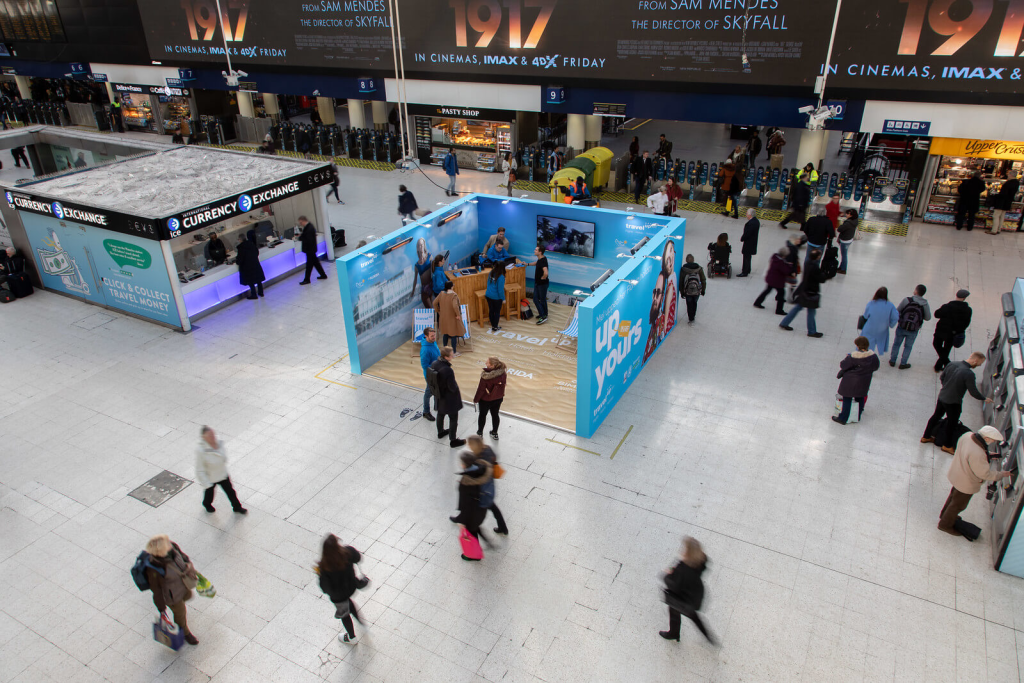
A good example is SEVEN’s Bringing Florida sunshine to London activation for TravelUp. The brief was to create a moment of escape for commuters by recreating the feeling of Florida in the middle of a busy London station.
Rather than treating it as a simple installation, SEVEN designed an immersive experience. The space was transformed into a beach setting using visual elements, heat, and a VR journey that allowed people to explore Florida in a few minutes. Every detail worked together to make the experience feel real and engaging, despite the constraints of a public space.
This level of coordination and creativity is difficult to achieve without the right expertise. It shows how the right agency can take a simple idea and turn it into something people genuinely connect with.
Partnering with a trusted events management agency ensures your event is in expert hands.
You can check out more about our work here!
Bottom Line
Planning a corporate event in the UK involves more than just organising individual elements. It requires a structured approach that connects objectives, audience, logistics, and experience.
When each stage is handled with clarity, the process becomes easier to manage and the outcome more effective. Instead of feeling reactive, planning becomes more intentional.
With the right approach, a corporate event can do more than bring people together. It can support meaningful engagement and deliver lasting value. Ready to plan your next event? Get in touch with our experts today. Ready to plan your next event?
To see how these experiences come to life, you can click here and follow SEVEN on LinkedIn for real event examples, ideas, and behind-the-scenes moments from our latest projects.
FAQs
1. How to plan a corporate event in the UK?
Start by defining clear objectives and understanding your audience. From there, set a budget, choose the right venue, and plan logistics carefully. A structured approach ensures that each stage of the event is aligned and well executed.
2. Why hire an event management agency?
An agency brings experience, structure, and coordination to the planning process. They manage logistics, suppliers, and execution, helping reduce risk and ensuring a smoother overall experience.
3. What is the most important part of event planning?
Clear objectives are essential, as they guide every decision that follows. Without them, even well-organised events may not deliver meaningful results.