Exhibition Stand Design & Event Production: Complete Guide for Brands
Discover how exhibition stand design and event production services work together to create memorable brand experiences. Learn about layout planning, AV production, interactive experiences, exhibition ROI, and how an event production agency in London delivers successful trade show events.
Discover how exhibition stand design and event production services work together to create memorable brand experiences. Learn about layout planning, AV production, interactive experiences, exhibition ROI, and how an event production agency in London delivers successful trade show events.
Exhibitions and trade shows give brands direct, physical access to an engaged audience. When someone walks into your stand, they’ve already chosen to stop.
The question is what happens next, and that depends almost entirely on how well the space was designed and how professionally the production was executed.
Today, we will cover everything UK brands need to know about exhibition stand design and event production services, from initial planning through to on-site delivery and beyond.
What Is Exhibition Stand Design?
Exhibition stand design is the discipline of creating a branded physical space that attracts visitors, holds their attention, and moves them towards a clear outcome, whether that’s a conversation, a product demo, a data capture, or a brand impression that sticks.
Good stand design starts well before anyone picks up a drill. It begins with questions:
- Who is the audience?
- What do we want them to feel when they arrive?
- What’s the journey from the aisle to the back of the stand?
- What’s the single most important message this space needs to communicate?
The physical elements that follow, layout, branding, signage, furniture, interactive technology, and lighting, are all answers to those questions. Working with a specialist in exhibition stand design means those answers are coherent, purposeful, and built to perform rather than just look impressive in a render.
At SEVEN, stand design is never treated as a visual exercise in isolation. It’s a strategic one. Every spatial decision we make is connected to your brief, your audience, and the commercial outcome you’re trying to achieve.
What Are Event Production Services?
Event production services cover the technical and operational side of bringing an event or exhibition to life. This is the layer of expertise that sits beneath the creative concept and makes sure it actually works when the doors open.
At a practical level, that includes:
- Lighting design and installation – the difference between a stand that commands attention from twenty metres away and one that disappears into the background.
- AV setup and management – screens, sound systems, video content playback, and any live broadcast or streaming requirements.
- Stage and set design – for brands running theatre-style presentations or keynote moments within their exhibition footprint.
- Fabrication and installation – the physical build, from structural elements and branded walls through to bespoke furniture and signage.
- On-site technical management – a production team on the ground throughout the event, ready to manage anything that needs adjusting in real time.
A professional event production agency in London brings all of these capabilities together under one roof. That matters because it removes the coordination burden from your team and puts a single, experienced point of accountability in its place.
Why Exhibition Stand Design and Event Production Must Work Together?
You can have a beautiful stand that nobody remembers, and you can have a technically flawless production that fails to land because the creative concept was weak. The two disciplines need each other.
When exhibition stand design and event production services are planned as one integrated process, the results are categorically different. The lighting is designed to work with the colour palette.
The AV content is sized for the screens that were specified. The visitor flow through the space is mapped before the build begins. The brand story runs consistently from the first visual impression to the last conversation.
At SEVEN, our in-house creative and production teams work from the same brief. That means the people designing your stand and the people building it are in the same conversations from day one. No handoff problems. No late-stage surprises when the design meets the reality of the venue.
What Are The Key Elements of High-Impact Exhibition Stands?
1. Strategic Layout and Flow
The layout of your stand determines the quality of the conversations you have. A poorly designed space creates bottlenecks, dead ends, and zones that visitors avoid entirely.
A well-designed one pulls people through naturally, creating the right moments for engagement along the way.
Think about entry points, sightlines from the aisle, areas for private conversations, and how visitors move from initial interest to a direct interaction with your team. These aren’t aesthetic choices, they’re commercial ones.
2. Strong Visual Identity
Your stand needs to be recognisably yours within seconds. That means consistent application of your brand, colour, typography, tone, across every physical element.
It also means making one clear visual decision that anchors the whole space rather than letting competing elements pull in different directions.
The brands that stand out on a busy exhibition floor are rarely the ones with the most going on. They’re the ones with the clearest single message and the confidence to commit to it.
3. Interactive Experiences
Passive stands lose visitors fast. Any element that invites participation, a product demo, a touchscreen, a VR experience, or a live presentation, raises dwell time and gives your team a natural reason to start conversations.
The technology should serve the objective, not the other way round. A well-chosen interactive element draws people in and gives them something to talk about. A poorly chosen one creates queues and confusion.
4. Technical Excellence
Lighting, sound, and digital integration all need to perform reliably across the full duration of the event. A screen that freezes, a microphone that cuts out, or lighting that hasn’t been set up for the venue’s conditions can undermine a stand that looks perfect in every other respect.
This is where experienced event production services pay for themselves. Getting the technical layer right is what allows everything else to work.
Types of Exhibition and Expo Projects
Brands approach SEVEN for very different kinds of exhibition and experiential work. The common thread is the need for design and production to work together at a high level of quality.
- Trade shows are the most familiar format, a branded stand within a larger event, competing for attention from a shared visitor pool. The brief here is almost always visibility, footfall, and lead conversion.
- Brand activations demand something different. The goal is an experience people remember and share, often in a public or semi-public environment where the brand has no guaranteed audience.
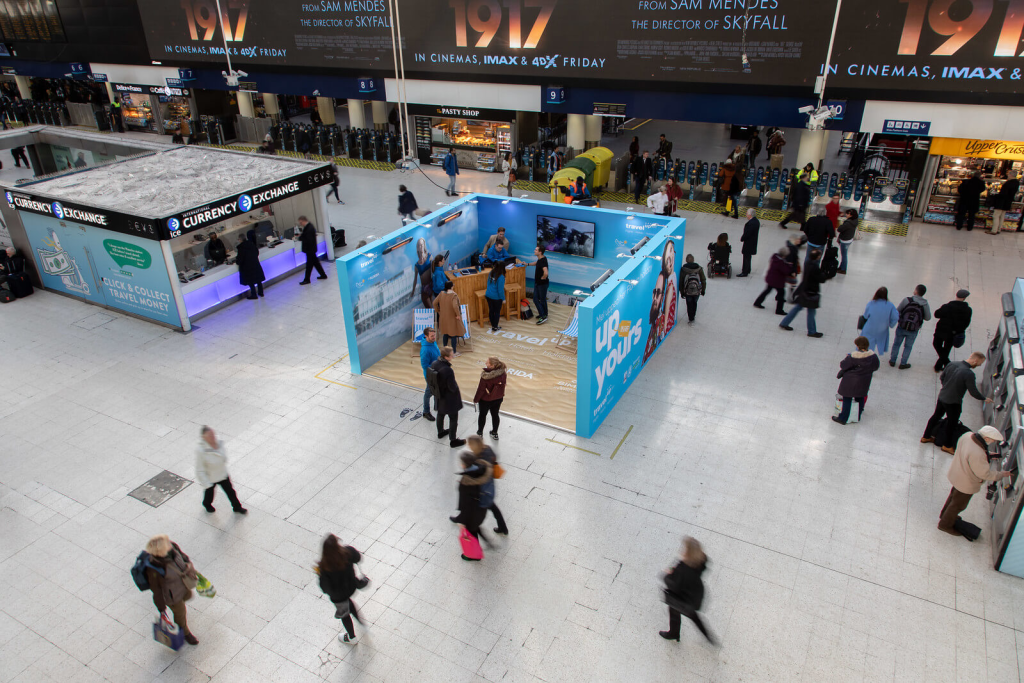
SEVEN delivered a brand activation for TravelUp and Visit Florida at Waterloo Station’s main concourse that captures this challenge well. The brief was to give London commuters a few minutes of genuine escape to Florida’s beaches in the middle of winter.
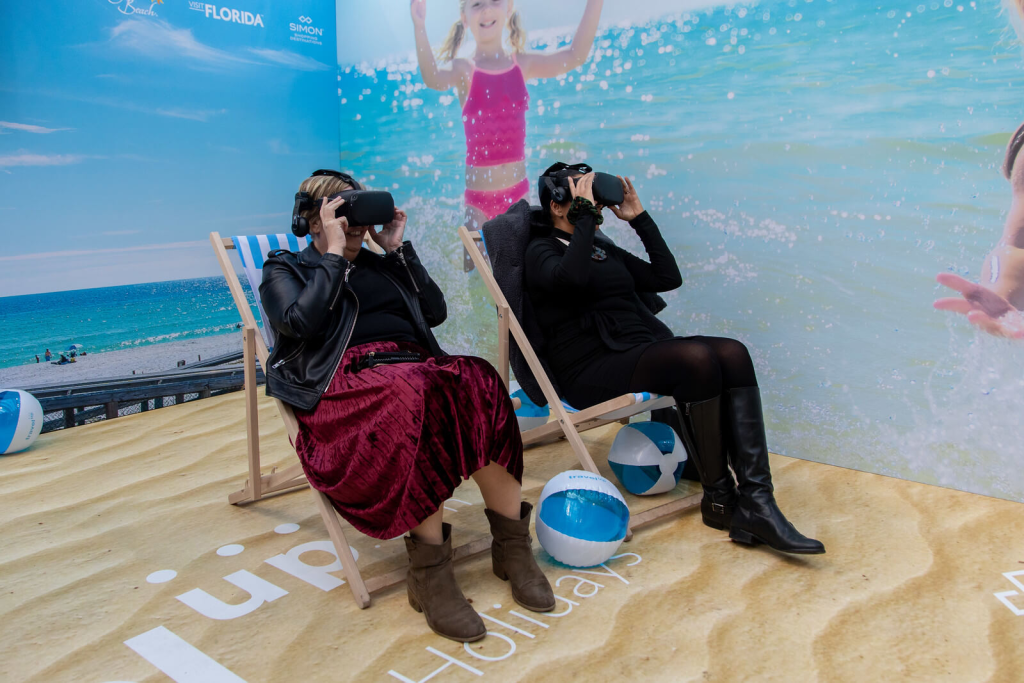
SEVEN sourced the concourse location and produced an immersive installation built around a VR experience, letting visitors take a guided journey through Florida’s highlights.
- Product launches use the exhibition format to give a new product or service its first public moment. The production quality has to match the ambition of what’s being launched, and the experience needs to give media, clients, or partners something to take away beyond a brochure.
- Experiential marketing installations are perhaps the most open-ended category. The brief is to create an environment that expresses a brand idea physically, often transforming a space that was never designed for the purpose.
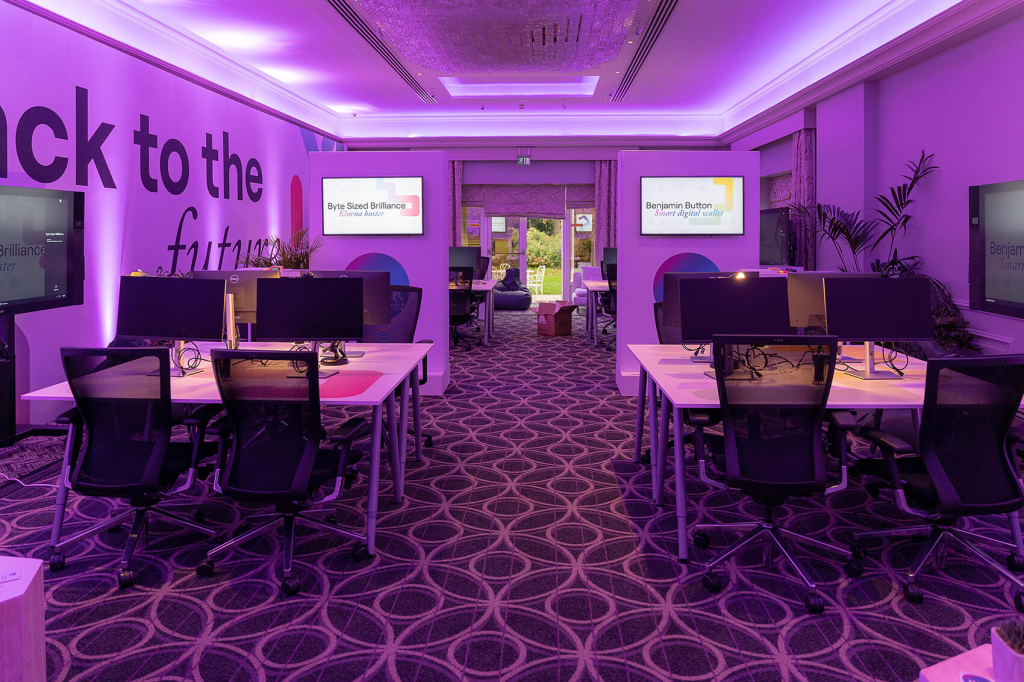
SEVEN’s work on a hackathon event for a technology client shows what this looks like in practice. The brief was to transform the conference spaces at Sopwell House into an immersive week-long workspace for eight teams of hackers.
Eight distinct hacking areas were created, each built for both productivity and creative thinking. The technology layer included personalised Surface Hubs for collaborative working.
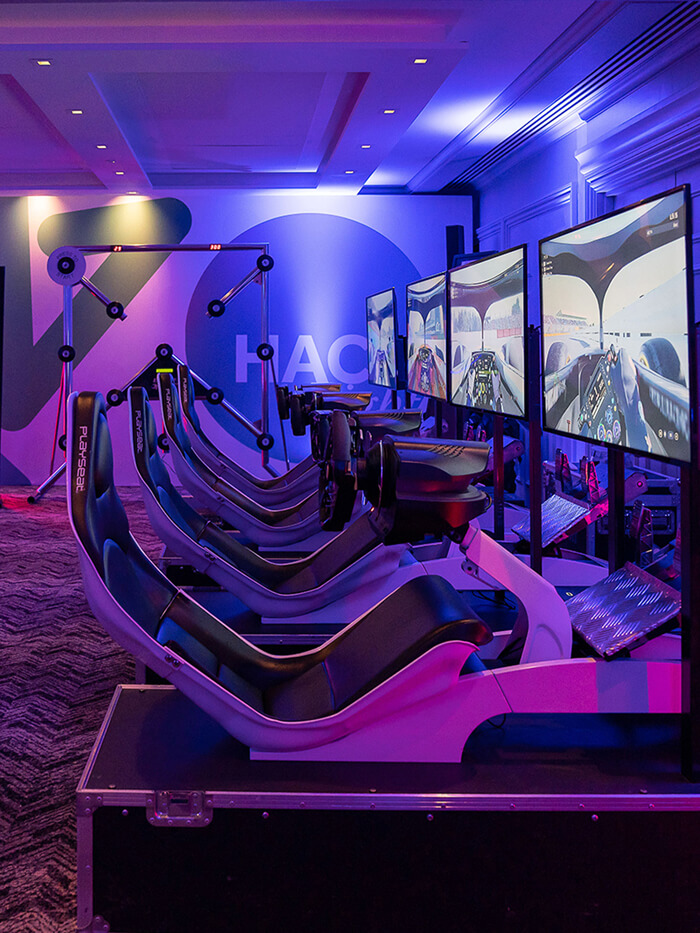
Alongside the physical build, SEVEN designed a programme of energiser activities and structured breaks, barista coffee, mobile massages, retro games, a pizza night, and wine tasting, that gave teams recovery time without breaking the event’s momentum.
Step-by-Step Exhibition Planning Process
Good exhibition stand design and production follow a clear sequence, and the order matters.
- Define your goals first. Are you there to generate leads, launch a product, raise brand awareness, or something else entirely? The answer shapes every decision that follows.
- Move into concept and design development. This is where the creative brief is translated into spatial thinking, layout, visual identity, interactive elements, and the overall visitor journey.
- Build the production plan. Technical specifications, supplier briefs, fabrication timelines, and venue logistics all need to be confirmed before the build phase begins.
- Manage the build and installation. This phase needs a dedicated project manager on the ground who knows the design, the technical spec, and the venue.
- Run on-site management throughout the event. A production team that disappears after installation is only half the service. The value of a professional event production agency in London is in having people present throughout who can resolve issues before they become problems.
- Review and report post-event. Footfall, engagement, lead volume, and conversion data all feed back into the brief for next time.
Common Exhibition Challenges
The same difficulties come up across almost every exhibition project when the planning hasn’t been thorough enough.
- Poor stand visibility is the most common. A stand that blends into its surroundings fails before a single conversation starts. Visibility is a design decision and doesn’t happen by accident.
- Weak engagement happens when the stand has been designed as a display rather than an experience. Visitors walk past, glance, and move on. The fix is interactive elements and a team with clear prompts for starting conversations.
- Technical failures during the event are almost always the result of inadequate testing before the doors open. An experienced event production agency in London will run full technical checks with enough time to resolve anything that needs attention.
- Budget overruns typically come from scope changes that weren’t flagged early, or from underestimating the complexity of the build. A good agency will flag risks and cost implications before they become surprises.
How to Maximise Exhibition ROI?
Every exhibition represents a significant investment. Getting value from it requires measurement that goes beyond a rough head count.
Track footfall through your stand separately from general visitor numbers. Measure how many conversations your team had and how many progressed to a genuine lead.
Follow up on those leads within 48 hours, because exhibition contacts go cold faster than most sales teams expect.
Beyond the immediate numbers, track brand recall, asking clients and prospects in the weeks after the show whether they remembered seeing you, and what they remembered. That data is more useful than it sounds when you’re briefing the design for next year.
For a closer look at how production and management work together across different event formats, read our guide on Event Production vs Event Management.
Why Work With an Event Production Agency in London?
A professional event production agency in London brings together the creative design, technical expertise, and project management disciplines that exhibition success depends on.
The agencies that do this well are the ones where those three things are genuinely integrated, not bolted together at the last minute.
SEVEN handles exhibition stand design and event production services as a single, joined-up offering. That means one team, one brief, and one point of accountability from concept through to the final pack-down.
Planning your next exhibition or brand activation? We’d love to talk through your brief.
Connect with the team at SEVEN
FAQs
1. What is exhibition stand design?
It’s the process of creating a branded physical space for an exhibition or trade show, covering layout, visual identity, interactive elements, and the visitor journey from arrival to conversion.
2. What does an event production agency do?
They handle the technical execution, logistics, and on-site delivery of events and exhibitions, including AV, lighting, fabrication, installation, and live event management.
3. How much does exhibition stand design cost?
Costs vary based on the size of the stand, the complexity of the build, the materials specified, and the level of technical production involved. A good agency will work transparently within your budget from the briefing stage.