Event Production vs Event Management: Key Differences Explained
Planning a successful corporate event takes more than good logistics or impressive staging alone. Understanding the difference between event management and event production is essential for delivering an experience that runs smoothly and leaves a lasting impression. This guide explains how production management services and production design services work together to support conferences, exhibitions, product launches, and experiential events.
Planning a successful corporate event takes more than good logistics or impressive staging alone. Understanding the difference between event management and event production is essential for delivering an experience that runs smoothly and leaves a lasting impression. This guide explains how production management services and production design services work together to support conferences, exhibitions, product launches, and experiential events.
Businesses planning a large-scale conference, product launch, or brand experience often discover mid-planning that they’ve conflated two distinct disciplines: event production and event management.
The confusion is understandable. Both are present at every well-run event. Both matter. But they do fundamentally different things, and knowing which one you need, and when, is the difference between a well-planned event and one that actually works.
Today, we break down what each discipline covers, where they overlap, and why the most successful events treat them as complementary rather than interchangeable.
What Is Event Management?
Event management is the planning and coordination function of any event. It’s the discipline that takes a brief and builds the operational structure that makes an event possible. In practice, event management covers:
- Budget planning and financial oversight – setting the budget, tracking spend, and managing cost control across every workstream.
- Scheduling and timeline management – building and maintaining the project plan from the first kick-off call through to post-event review.
- Vendor coordination – identifying, briefing, and managing every supplier involved in the event.
- Logistics management – venue contracting, delegate travel, accommodation, catering, and on-site operations.
- Client and supplier communication – keeping all parties informed and in agreement across the planning process and responding to changes as they arise.
Event management is the discipline that stops things falling through the gaps. It’s what makes a complex event with dozens of moving parts feel, from the outside, like it ran effortlessly. The planning is invisible when it’s done well, and painfully visible when it isn’t.
What Is Event Production?
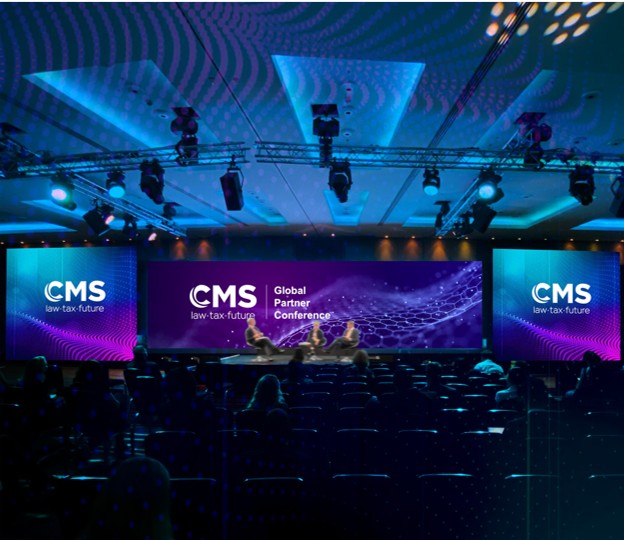
Event production is the technical and creative execution of an event. While event management builds the plan, production brings it to life physically, visually, and sonically.
Production management services cover:
- Audio-visual design and operation – sound systems, screens, video playback, and live switching throughout the event.
- Lighting design and rigging – the creative and technical work that shapes how a space looks and how attention is directed within it.
- Stage design and set build – from a simple conference set to a fully built exhibition environment.
- Fabrication and installation – the physical construction of branded elements, structures, and bespoke set pieces.
- On-site technical management – a production crew and technical director present throughout, managing everything from the control desk to the stage floor.
A well-run event production function is the reason a keynote speaker sounds clear to every person in a 500-seat auditorium.
It’s why the LED wall behind the stage displays the right content at the right moment. It’s the technical precision that makes a creative concept land.
At SEVEN, production management services sit alongside event management as an integrated offering, not a bolt-on. That distinction matters when you’re planning anything beyond a basic meeting format.
What Are Production Design Services?
Production design services sit at the intersection of creative direction and technical planning. This is the discipline that takes a brand or event concept and translates it into a physical, spatial, and visual language.
Production design services typically cover:
- Stage design – the visual architecture of the main presentation space, including set elements, scenic structure, and sight lines from the audience.
- Set creation and fabrication – the physical build of bespoke elements that can’t be hired off a shelf.
- Visual storytelling – working with video content, motion graphics, lighting states, and environmental design to tell a coherent story across the full event space.
- Technical layouts and production drawings – the detailed specifications that allow the build team to execute the design accurately within the venue’s constraints.
Production design services are what separate an event that looks generic from one that looks like it was made specifically for the brand running it.
Every element, the colour temperature of the lighting, the depth of the stage, the proportion of the set against the room, has been considered in relation to the brand, the content, and the audience.
At SEVEN, production design begins at the briefing stage, not after the event management plan has been signed off. That allows the creative and operational workstreams to inform each other rather than running in sequence.
Key Differences Between Event Production and Event Management
The clearest way to understand the distinction is to follow what each discipline owns across the event lifecycle.
| Aspect | Event Management | Event Production | How They Work Together |
| Primary Focus | Oversees the overall planning and coordination of the event | Oversees the technical and creative execution of the live experience | Both functions collaborate to deliver a seamless event from planning to execution |
| Core Questions Owned | “What, when, who, and how much” | “How it looks, sounds, and feels” | Decisions in one area directly impact the other |
| Main Responsibility | Managing the event plan, timeline, budget, and stakeholders | Managing staging, lighting, sound, visuals, and technical delivery | Constant communication ensures alignment between logistics and technical execution |
| Key Objective | Ensure every element is organised before the event begins | Ensure the audience experience matches the creative vision without technical failures | Both aim to create a successful and engaging event experience |
| Typical Tasks | Scheduling, vendor coordination, budgeting, guest management, venue logistics, staffing, and run-of-show planning | Audio-visual setup, stage production, lighting design, live streaming, cue management, technical rehearsals, and equipment oversight | Shared updates help avoid delays, technical issues, and scheduling conflicts |
| Role During Event Day | Keeps the event running on time and coordinates all moving parts | Executes live technical cues and manages production performance | Both teams work in lockstep during live execution |
| Impact of Changes | Adjusts timelines, schedules, staffing, and coordination plans | Adjusts cue lists, technical timing, production flow, and equipment requirements | Even small run-of-show changes affect both teams simultaneously |
| Success Measurement | Smooth logistics, efficient coordination, budget control, and stakeholder satisfaction | Flawless technical delivery, immersive audience experience, and creative consistency | Success depends on both operational precision and technical excellence |
| Example Role Titles | Event Manager, Event Coordinator, Project Manager | Production Manager, Technical Director, Stage Manager | Leadership teams often collaborate on the same event brief |
| Relationship Between Teams | Provides structure and operational direction | Brings the event vision to life technically and creatively | Agencies like SEVEN integrate both functions closely, so teams solve the same problem from different angles |
When Do You Need Production Management Services?
Production management services become necessary as soon as an event involves any significant technical element. The threshold is lower than most clients expect.
A conference for 100 people with a live presentation, a screen, and a microphone already involves production. The question is whether that production is being managed professionally or is being left to whoever shows up and hopes the HDMI cable works.
Production management services are non-negotiable for:
- Large-scale conferences and summits – where AV failure or technical instability during a keynote is not a recoverable situation.
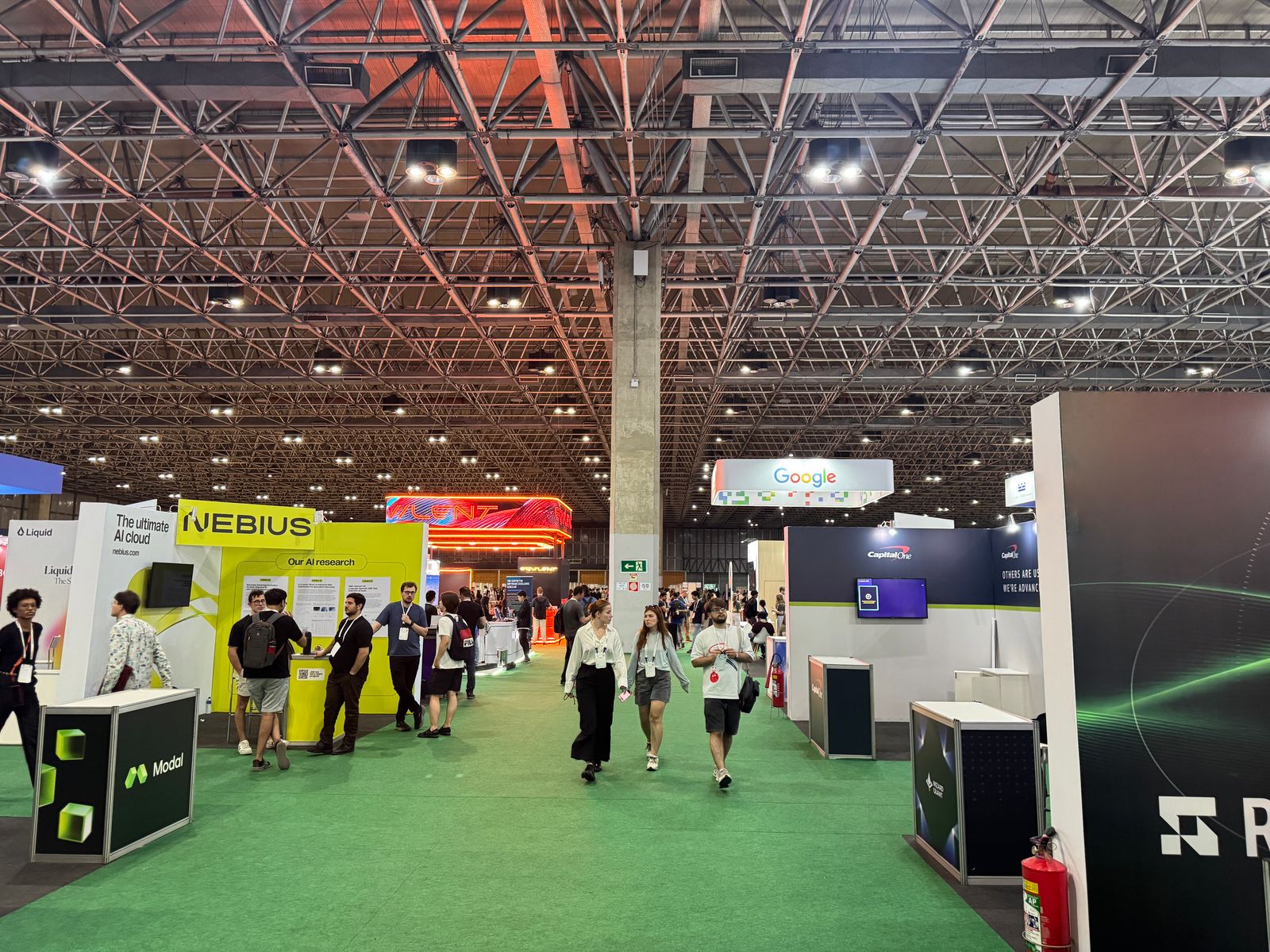
- Exhibitions and expos – where stand design, lighting, and interactive technology all require coordinated build and operation.
- Product launches – where the production quality has a direct relationship with how the product is perceived.
- Experiential marketing installations – where the entire concept depends on technical execution.
- Hybrid events – where the online experience requires broadcast-quality production to hold a remote audience.
If the audience will notice when something goes wrong, you need dedicated production management services in place before the event begins.
When Do You Need Production Design Services?
Production design services are the right call any time an event needs to look and feel like something specific, not just functional.
If your brief includes phrases like “we want it to feel like a brand world,” “we want the audience to feel a certain way when they walk in,” or “this needs to be different from what we’ve done before,” that’s a production design brief.
The answer to those briefs isn’t better logistics – it’s creative direction applied to space, light, structure, and content.
Production design services are particularly valuable for:
- Annual conferences that need to evolve year-on-year without losing their identity.
- Leadership summits where the environment needs to reflect the seniority and ambition of the audience.
- Awards ceremonies where the staging has to carry both gravitas and celebration.
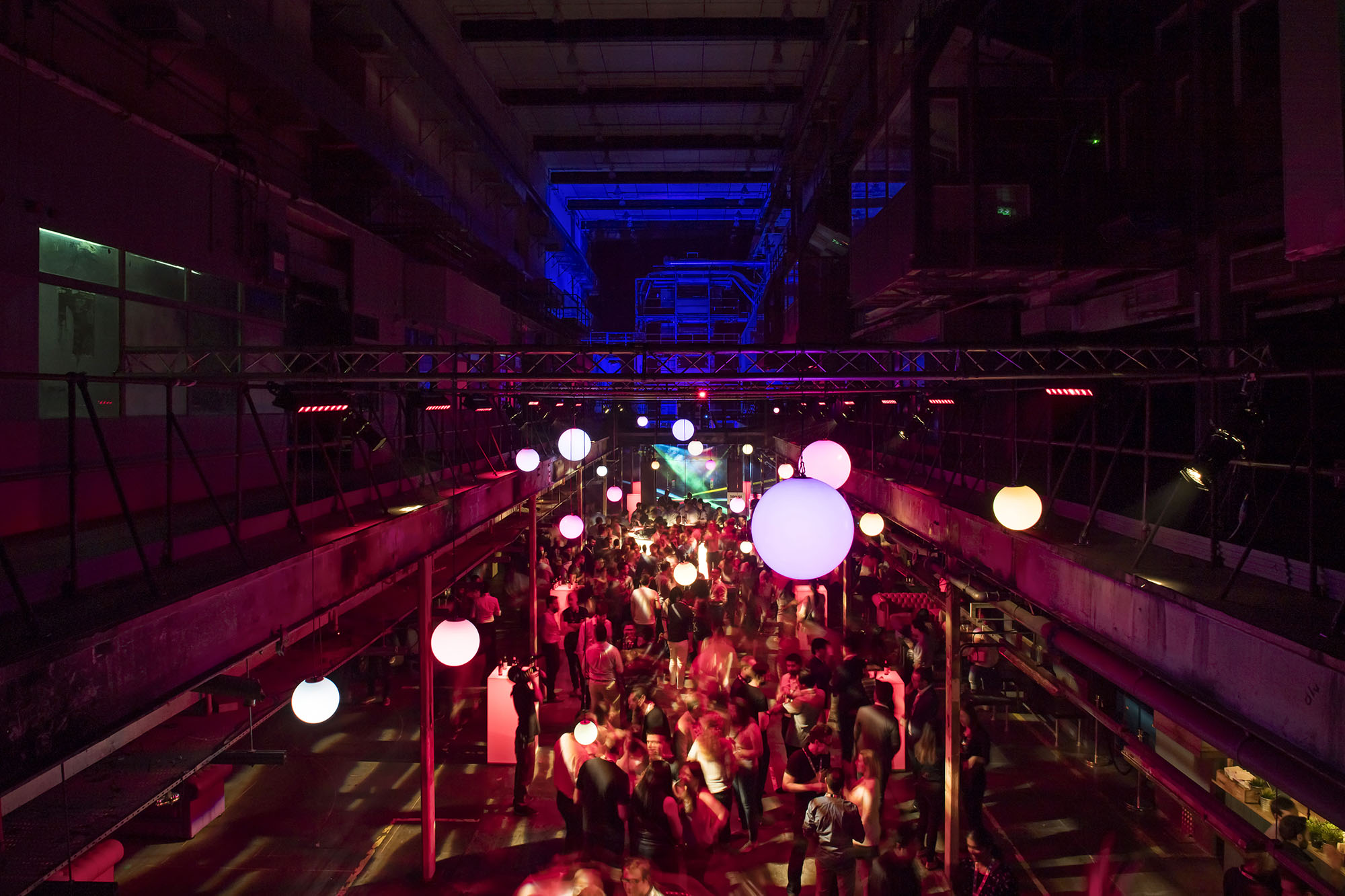
- Experiential activations where the design is the product.
The earlier production design services are brought into a project, the more coherent the result. Design decisions made after the logistics are locked tend to be constrained by what’s already been agreed. Design decisions made alongside the logistics shape the event from the ground up.
When Do You Need Both?
For most serious corporate events, both disciplines are present. The question is whether both are being handled with equal rigour.
The most common failure mode is an event that’s well-managed but poorly produced. The logistics worked, the catering arrived on time, the delegates were registered correctly, but the main stage looked flat, the sound was uneven, and the experience didn’t match the ambition of the brief.
The second most common failure mode is an event that’s beautifully designed but under-managed: the set looks incredible, the production team did excellent work, but the run of show slipped, a speaker arrived late because travel wasn’t coordinated, and the catering ran out an hour before the end.
Both functions need to be present, briefed from the same starting point, and communicating throughout. At SEVEN, production management services and production design services sit within the same agency structure as event management, so none of the coordination that matters falls between disciplines.
How Does This Connect to Exhibition Strategy?
Exhibitions make the relationship between event management and production particularly clear.
The event management function handles venue contracting, build schedules, contractor coordination, and on-site logistics.
The production function handles stand design, fabrication, technical installation, and the on-site experience.
Neither works without the other. A beautifully designed stand that isn’t installed correctly, or isn’t ready when the doors open, fails commercially regardless of the creative quality.
A logistically precise exhibition that looks generic fails commercially regardless of how well the budget was managed.
For a complete guide to combining design and production for exhibitions, read our Exhibition Stand Design guide.
Why Work With SEVEN?
SEVEN provides event management, production management services, and production design services as a single, integrated offering. That means one agency, one brief, and one team accountable for both the plan and its execution.
Our clients include global brands in technology, finance, healthcare, and automotive, running events across more than 85 countries.
Whether you need a fully produced annual conference, an experiential brand activation, or an exhibition stand that performs commercially, we’d love to hear from you.
Connect with the team at SEVEN.
FAQs
1. What is event production?
Event production is the technical and creative execution of a live event, covering AV, lighting, staging, fabrication, and on-site technical management.
2. What is the difference between event production and event management?
Event management plans and coordinates the event. Event production executes it technically and creatively. Both are needed for high-quality events.
3. What are production design services?
Production design covers the creative translation of a brief into a physical event environment, including stage design, set build, visual storytelling, and technical layout.