Professional Conference Organisers London: Complete Planning Guide
Planning a successful corporate conference takes more than booking a venue and inviting delegates. Discover how professional conference organisers in London manage conference event management, speaker coordination, delegate experience, and event ROI to deliver high-impact business events.
Planning a successful corporate conference takes more than booking a venue and inviting delegates. Discover how professional conference organisers in London manage conference event management, speaker coordination, delegate experience, and event ROI to deliver high-impact business events.
Corporate conferences are among the most powerful formats in the B2B events toolkit.
When they work, they build authority, bring the right people into the same room, and create the kind of face-to-face momentum that no amount of digital marketing can replicate.
When they don’t work, they drain the budget, frustrate delegates, and leave your leadership team wondering why they bothered.
The difference, more often than not, is planning. Specifically, it’s whether you had the right professional conference organisers in London running the process from the outset.
At SEVEN, we’ve planned and delivered conferences for global brands across technology, healthcare, finance, and automotive. This guide pulls together what we know about making them count.
What Do Professional Conference Organisers Do?
Conference organisers are responsible for the full planning and delivery cycle of a conference from the first strategic conversation through to on-site execution and post-event reporting.
That scope is broader than most clients expect when they first approach an agency. It covers:
- Venue sourcing and negotiation, finding the right space for your delegate profile, production requirements, and budget, then securing it on the best possible terms.
- Delegate management registration systems, confirmation communications, on-site check-in, and attendee experience throughout the event.
- Speaker coordination briefings, travel logistics, technical requirements, and rehearsal management.
- AV and technical production set design, lighting, sound, live streaming, and any interactive technology elements.
- Agenda development, working with your team to build a programme that holds attention and delivers your core messages in the right sequence.
- On-site delivery manages every operational element on the day so your team can be present and visible, rather than running around solving problems.
Working with experienced conference organisers means that every one of those workstreams has a professional owner. Nothing gets dropped because it fell between two people’s areas of responsibility.
Why Businesses Hire Professional Conference Organisers in London?
London is one of the world’s leading conference destinations. The city offers a genuine concentration of high-quality venues, strong international transport connections, and a professional audience that’s already accustomed to attending world-class events.
The case for working with professional conference organisers in London goes beyond the city itself. It’s about access.
An established conference agency will have built relationships with venue operators, AV suppliers, catering companies, and production teams over many years.
Those relationships mean better availability, competitive pricing, and the kind of goodwill that gets problems solved quickly when something unexpected happens on the day.
SEVEN operates from Mayfair and has delivered conferences across more than 85 countries. That combination of London-based expertise and global reach is something in-house teams rarely have.
Key Elements of Successful Conference Event Management
Good conference event management is built on a small number of principles that apply across almost every format and scale.
1. Clear Objectives From the Start
A conference without a clear objective is a very expensive room booking. Before any venue is shortlisted or any speaker is approached, you need to define what you’re trying to achieve.
- Are you bringing a leadership team into agreement on a shared direction?
- Launching a new product or strategy to your client base?
- Building brand authority in a competitive sector?
- Recognising performance and rewarding key relationships?
Each of these calls for a different structure, a different tone, and a different measure of success.
The clearer your objective, the stronger the brief you can give your conference organisers, and the more precisely they can design an event that actually delivers it.
2. Venue Selection That Serves the Event, Not the Other Way Round
The venue doesn’t just provide a backdrop. It shapes the energy of the day, the flow of movement between sessions, the quality of the catering experience, and the impression delegates carry with them when they leave.
A good venue for a leadership summit is not the same as a good venue for a product launch or an industry conference.
Size, layout, natural light, technical infrastructure, sustainability credentials, and location all feed into the decision. Professional conference organisers will shortlist venues with all of these factors in view, not just availability and price.
3. Speaker and Agenda Management
Your speakers are, in many cases, the main reason your delegates register. Getting the right people on stage and preparing them properly is a core part of what conference event management involves.
That means thorough briefing calls, clear guidance on content and format, technical run-throughs, and logistics support that leaves speakers free to focus on delivering rather than worrying about whether their slides will load. It also means building an agenda with the right rhythm
the right balance of plenary and breakout, the right moments of energy and reflection, the right session length for the content it carries.
4. Delegate Management From Registration to Departure
The delegate experience starts well before the conference itself. A poorly managed registration process, slow confirmations, or confusing travel guidance will colour how attendees feel before they’ve even arrived.
Strong conference organisers manage this journey carefully, using the right registration technology, communicating clearly at every stage, and building an on-site experience that makes delegates feel genuinely welcomed and well looked after.
Post-event, the same rigour applies. Follow-up communications, feedback collection, and post-event reporting all form part of a complete conference event management process.
Types of Conferences Businesses Run
The range of conference formats that organisations plan is wider than most people realise. SEVEN works across all of them.
1. Leadership summits bring senior teams together to set direction, build relationships, and make decisions that require in-person trust to stick. They tend to be smaller in scale and higher in stakes.
2. Annual corporate conferences are recurring fixtures in many organisations’ event calendars. They need enough variety year-on-year to stay fresh, and enough consistency to build a sense of tradition and expectation.
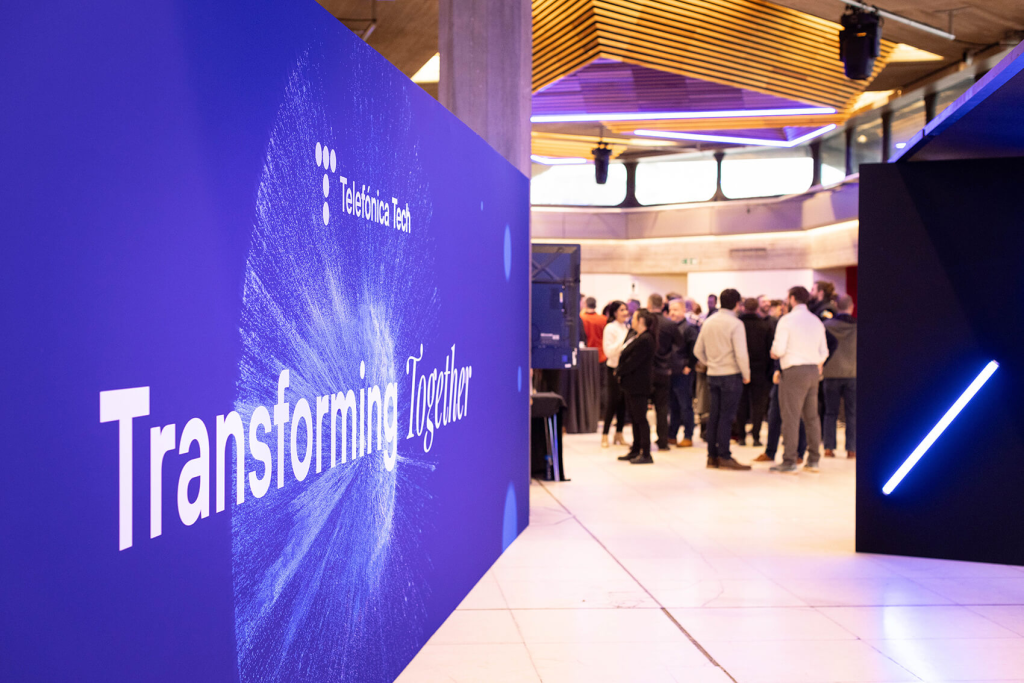
SEVEN has delivered Telefónica Tech’s annual Kick-off conference for over five years, supporting the business through mergers and acquisitions as the event has grown into the company’s flagship internal moment of the year.
3. Industry conferences position your business as a voice of authority in your sector. The speaker mix, topic selection, and delegate profile all contribute to how that positioning lands.
4. Hybrid conferences combine a live audience with a remote one. Getting this right requires deliberate production design. The remote experience has to be built as its own thing, not treated as a video stream of the physical event.
SEVEN designed and built an updated event application and online viewing platform, giving venue guests and remote attendees a genuinely fresh interface rather than a familiar one carried over from the year before.
Satellite offices in Belfast and Edinburgh joined via a two-way live link, bringing them fully into the main event rather than leaving them as passive viewers.
Read more about the case study
5. Virtual conferences have matured significantly in recent years. The best ones use purpose-built platforms, tight session durations, and interactive formats to keep remote delegates genuinely engaged across a full day or more.

SEVEN delivered exactly this for Pepsi Lipton’s annual European Marketing conference. After a successful first virtual event during the pandemic, the client chose to keep the format virtual to reach a wider European audience.

SEVEN built a fully customisable event platform capable of broadcasting a high-quality stream across two full days, with over 40 presenters requiring coordinated technical checks and rehearsals managed under significant time pressure after the event date was brought forward at short notice.
How to Measure Conference ROI?
Every conference costs money. Knowing whether it was worth it requires measurement that goes beyond head count. The metrics that matter depend on your objectives, but common ones include:
- Registration and attendance rate: how many people committed, and how many actually showed up.
- Lead generation: How many qualified commercial conversations did the event create?
- Audience engagement scores session feedback, live poll participation, and net promoter-style ratings.
- Speaker and content ratings for sessions that landed and those that didn’t.
- Sponsor satisfaction if commercial partnerships are part of the model.
Professional conference organisers in London will help you build a measurement plan before the event, not scramble to find data afterwards. SEVEN’s post-event reporting pulls all of these threads together into a clear picture of what worked and what to adjust next time.
What Are Some Common Conference Planning Mistakes?
Even well-resourced businesses make the same planning mistakes when they try to manage conferences without specialist support.
- Poor timeline planning is the most common. Venue sourcing, speaker confirmation, registration opening, and production briefing all have dependencies on each other. Compress the timeline in one area, and the effect ripples through everything else.
- Weak agenda structure produces conferences that feel like a series of presentations rather than a coherent event. If delegates can’t tell what the event is building towards, their attention drifts.
- Inadequate AV and production planning is painful and avoidable. Poor sound quality, slides that don’t load, and lighting that makes speakers look poorly lit all undermine content that deserved better.
- Lack of attendee engagement design is perhaps the most underestimated mistake. Passive audiences don’t stay engaged. Building interaction, movement, and genuine connection opportunities into the day is what separates a conference people remember from one they forget before they reach the car park.
Bringing in professional conference organisers early, ideally six to twelve months before the event date, is the most effective way to avoid all of these.
Why Work With Conference Event Planners at SEVEN?
SEVEN is one of the UK’s leading agencies for conference event management. We’re based in Mayfair, with offices in Birmingham too, and we’ve spent fifteen years building the expertise, supplier relationships, and creative capabilities that make a measurable difference to how conferences perform.
We work as an extension of your team, not as a supplier you brief and then chase for updates. Our conference planning process starts with a thorough understanding of your objectives and your audience, and every decision from that point forward is built around those foundations.
From initial concept through to post-event analysis, SEVEN’s professional conference organisers in London handle every workstream with the kind of professional care that lets your team show up on the day ready to lead, rather than ready to manage logistics.
If you’re planning a conference and want to talk through your brief, we’d love to hear from you.
FAQs
1. What do conference organisers do?
They manage the complete planning and delivery of corporate conferences, covering everything from venue sourcing and speaker coordination to on-site management and post-event reporting.
2. Why hire conference organisers in London?
You get access to local venue relationships, an established supplier network, and a team with the experience to handle the operational complexity so your internal team can focus on the business outcomes.
3. How far in advance should you plan a conference?
For most corporate conferences, six to twelve months is the right window. Larger, more complex events, particularly those with international speakers or hybrid production, may need longer.