The Future of Events: A Deep Dive into Hybrid Experiences
Discover how hybrid events are reshaping the future of gatherings by blending in-person and virtual experiences for greater reach, inclusivity, and engagement. At SEVEN, we specialise in creating dynamic hybrid events that connect global audiences seamlessly. From strategy to execution, we help you plan impactful events that go beyond physical boundaries. As the future of events continues to evolve, hybrid formats are becoming a core pillar of modern event strategy rather than an optional add-on.
Discover how hybrid events are reshaping the future of gatherings by blending in-person and virtual experiences for greater reach, inclusivity, and engagement. At SEVEN, we specialise in creating dynamic hybrid events that connect global audiences seamlessly. From strategy to execution, we help you plan impactful events that go beyond physical boundaries. As the future of events continues to evolve, hybrid formats are becoming a core pillar of modern event strategy rather than an optional add-on.
The Future of Events: A Deep Dive into Hybrid Experiences
Remember the days when attending an event meant being physically present or not at all? Those times are evolving, and the future of gatherings is undeniably hybrid. At SEVEN, we’ve seen first-hand how combining the best of both physical and virtual worlds creates an expansive, inclusive, and truly dynamic experience. The move towards hybrid events isn’t just a trend; it’s a strategic evolution that offers unparalleled reach and engagement.
This shift reflects the broader future of event planning, where flexibility, accessibility, and technology-led experiences define success.
Let’s explore what a hybrid event is, how it stands apart, and the exciting steps involved in planning one.
What is a Hybrid Event?
Let us begin with the fundamentals. A hybrid event includes both a live, in-person audience experience with a virtual audience. It might imply holding a conference in a London venue and broadcasting the keynote sessions to the audience in Sydney, New York, or any other place across the globe. This model plays a crucial role in the future of hybrid events by allowing organisations to scale attendance without geographical limitations.
Nonetheless, hybrid is not a compromise to accommodate people who cannot visit the event in person but a potent format in terms of outreach, accessibility, and interactivity.
In SEVEN, we view hybrid events as a means of futureproofing your strategy. This can be a company event, the launch of a product, a reward ceremony, or any other event; in any case, hybrid events open the gates to a broader demographic and increase opportunities. As businesses look ahead, hybrid formats are becoming essential to long-term event planning strategies.
Virtual versus Hybrid Events
One is tempted to think that ‘hybrid’ and ‘virtual’ can be used interchangeably; however, they are distinct and serve different purposes.
Virtual events are conducted in an online environment. The idea is webinars, live-streaming, or entirely online conferences in which everyone is behind the screen.
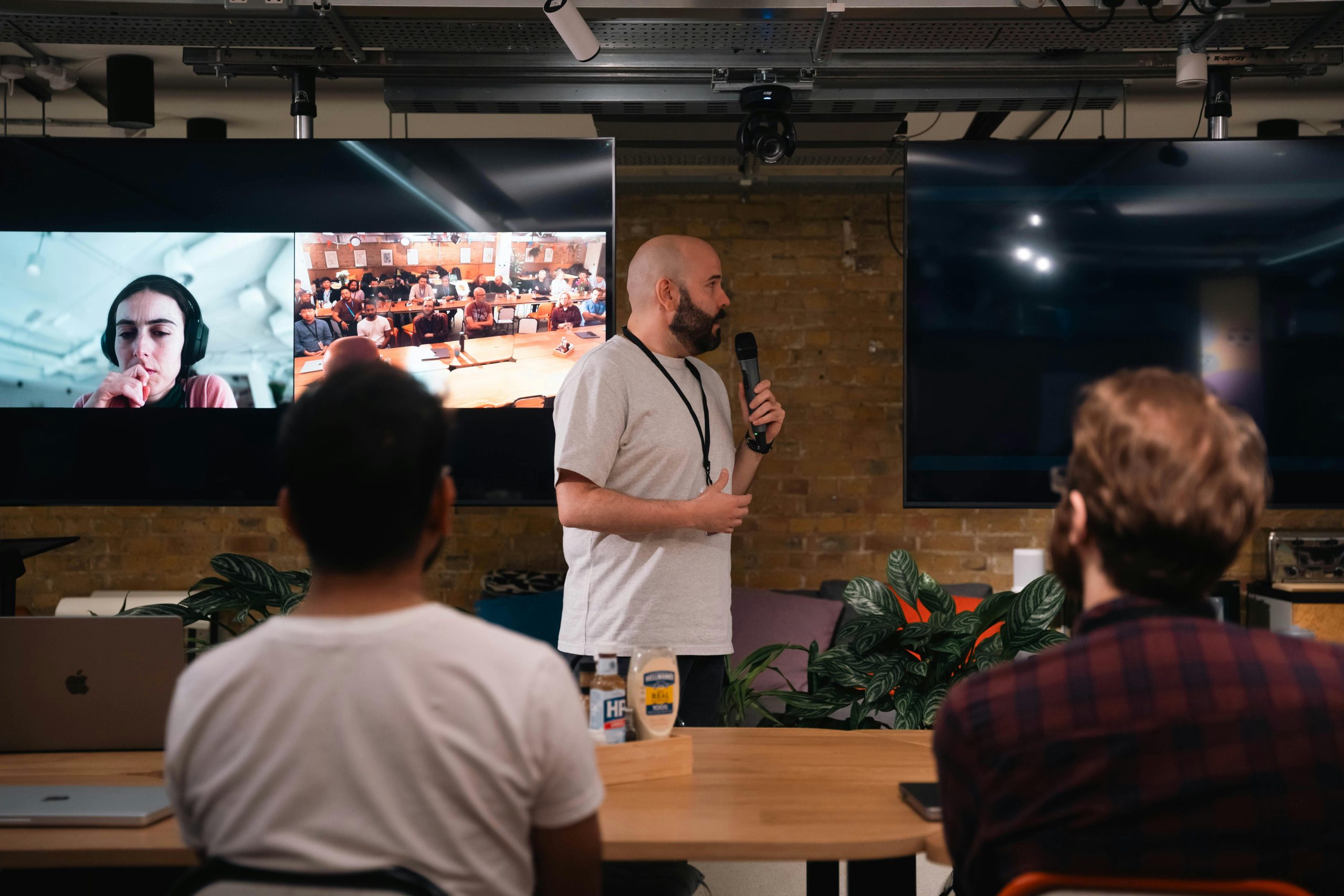
Hybrid events, however, are designed to accommodate two audiences simultaneously: those in the room and those following remotely.
This distinction is central to understanding the future of hybrid events and how they outperform single-format experiences.
The distinction within a virtual and hybrid event is in the experience of designing. Unlike virtual, which entirely consists of technology to attract audiences, a hybrid combines physical presence and digital connection.
This translates to flexibility and greater creative control. From an innovation perspective, this flexibility defines the future of event planning for global brands.
And this is the best bit: you are not forced to pick one or the other. With proper planning, a hybrid event offers the best of both worlds.
Why Hybrid Events Are Here to Stay
Hybrid events are becoming more than just a trend; they are a wise investment in a world where workforces are becoming more global and travel expenditures are being scrutinised.
The following explains why more and more clients are gravitating towards hybrid experiences:
- Scalability: Your event can reach far more people than the capacity of your facility would permit with virtual integration.
- Sustainability: A lower carbon footprint results from less travel and printed materials.
- Data-driven insights: We can monitor user behaviour, attendance, and engagement in real-time with virtual platforms.
- Inclusion: Regardless of location, mobility, or time zone, hybrid enables everyone to participate.
These benefits reinforce why hybrid models are shaping the future of events across industries.
At SEVEN, hybrid design is about creativity and connection rather than compromise.
How to Plan a Hybrid Event: Our Approach at SEVEN
Planning a hybrid event means designing two parallel experiences that feel equally exciting. That’s where we come in.
Our methodology reflects best practices aligned with the future of event planning and audience expectations.
Here’s how to plan a hybrid event with success:
1. Define your desires
Are you seeking to generate leads? Launch a new product? Engage personnel? Knowing your ‘why’ helps us shape the ‘how’. Every element — from the tech platform to the content layout — flows out of your core objectives.
2. Know your audiences
What do your face-to-face participants require in comparison with your online ones? By developing both experiences end-to-end at SEVEN, we can create bespoke content, points of interaction and support for every audience.
3. Select an appropriate venue and platform
The facility should be hybrid-capable, with strong Wi-Fi, technical facilities, and broadcasting space. On the same note, your virtual platform must incorporate functions such as live Q&A, breakout rooms, live polling, and on-demand playback.
4. Rehearse and test all things
Whether that involves camera angles, microphones, our virtual interface, or instructions to our audience, we test each component beforehand. It is the hard work of the rehearsal that enables a great hybrid run to proceed seamlessly.
5. Make it interactive
We are not merely streaming what happens, but we take the virtual audience into the action. Live chats, polls, competitions, and surprise moments are the tools our team uses to keep people engaged, regardless of where they watch.
6. Remember the follow-up
We assist you in repurposing the content, sharing recordings, and gathering feedback from both audiences after the event to gauge success and use it to guide your next event.
This continuous improvement loop is a defining factor in the future of hybrid events.
Head to the services page to see how we put all this together with savoir-faire, versatility and technical expertise.
At SEVEN, we thrive on the challenges and the fantastic opportunities of hybrid events. We collaborate closely with you to conceptualise, strategise, and deliver events with a holistic approach to the physical-digital divide, making them participatory and meaningful experiences. As with our custom event planning service, where we attach importance to all the details delivered according to your vision, we approach the hybrid event strategy in the same manner.
Ready to unlock the full potential of your next gathering with a powerful hybrid experience? Get in touch with us today at hello@sevenevents.co.uk to explore how SEVEN can help you navigate the future of events.
FAQs
1. What is the future of events?
The future of events is increasingly hybrid, combining in-person experiences with virtual participation to maximise reach, flexibility, and engagement while reducing logistical and geographic limitations.
2. How do hybrid events improve audience engagement?
Hybrid events improve engagement through live interaction tools such as polls, Q&A sessions, breakout rooms, and on-demand content, ensuring both in-person and virtual attendees feel equally involved. At SEVEN Events, we design hybrid experiences that keep both audiences connected and engaged throughout the journey. Speak to SEVEN Events to create a truly engaging hybrid experience.
Are hybrid events more effective than traditional in-person events?
Hybrid events can be more effective than traditional events by extending audience reach, improving accessibility, and providing real-time data insights while still preserving the value of face-to-face interaction. At SEVEN Events, we help brands strike the right balance between physical and digital delivery to maximise impact. Get in touch to explore how hybrid could work for your next event.
What role does technology play in the future of event planning?
Technology enables seamless streaming, audience interaction, performance tracking, and content repurposing, making it a central pillar in the future of event planning and hybrid event delivery. SEVEN Events integrates the right technology to ensure smooth delivery and measurable outcomes. Talk to our team about future-ready event solutions.
How can brands prepare for the future of events?
Brands can prepare by adopting hybrid-first strategies, investing in flexible event platforms, and working with experienced event partners to design integrated physical and digital experiences. At SEVEN Events, we partner with brands to future-proof their event strategies from concept to delivery. Start planning your next event with SEVEN today.
What are the event trends in 2026?
Event trends in 2026 are centred around hybrid experiences, sustainability, data-driven engagement, and personalised attendee journeys. Hybrid and hybrid-first event formats will continue to grow as organisations prioritise flexibility, global access, and measurable outcomes. Other key trends include immersive technology (AR/VR), micro-events, experiential design, and meaningful community-focused gatherings that blend physical and digital participation.